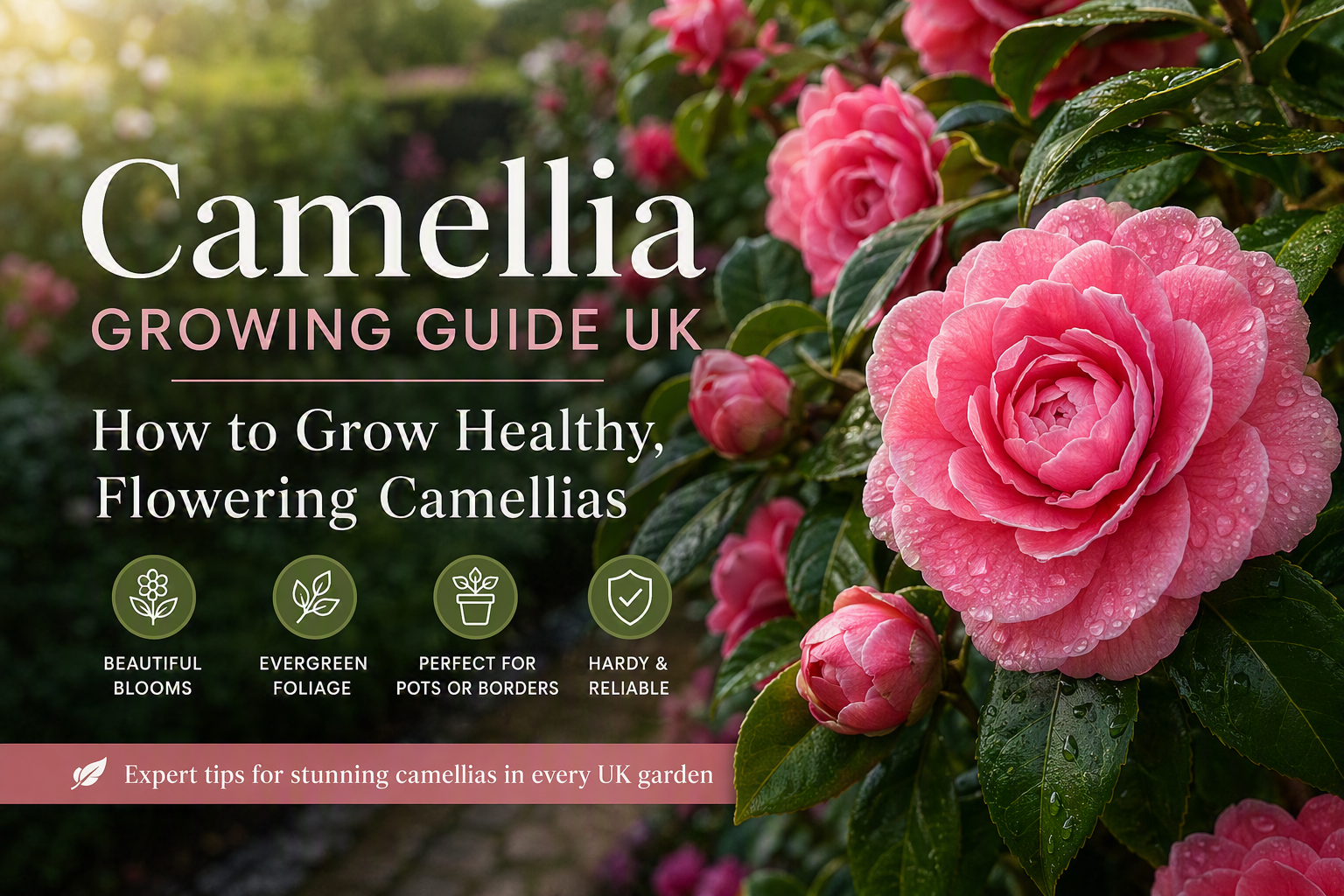
🌿 Camellia Growing Guide UK: How to Grow Healthy, Flowering Camellias
Camellias are one of the most rewarding flowering shrubs you can grow in the UK, providing early colour when little else is in bloom. With the right conditions—particularly soil and positioning—they’re surprisingly easy to grow and will reward you with years of reliable flowers and glossy evergreen foliage.
🌱 Choosing the Right Spot for Camellias
Camellias are quite specific about where they grow best.
They prefer:
- Partial shade (morning sun, afternoon shade ideal)
- Shelter from strong winds
- Protection from early morning frost
Avoid:
- Full harsh sun (can scorch leaves and buds)
- Frost pockets (damages developing flowers)
💡 Best tip: A north or east-facing position is usually perfect in UK gardens.
🌿 Soil Matters: Why Ericaceous Soil Is Essential
Camellias are acid-loving plants, meaning they need the right soil conditions to thrive.
They require:
- Acidic soil (pH 5.5–6.5)
- Free-draining but moisture-retentive structure
- Organic-rich soil
If your soil isn’t suitable: 👉 Grow in containers using ericaceous compost
⚠️ In alkaline soil, camellias will struggle and show signs of nutrient deficiency.
💧 Watering Camellias Properly
Consistent moisture is key, especially when plants are forming flower buds.
- Keep soil evenly moist (not waterlogged)
- Water more during dry spells
- Use rainwater where possible
💡 Tap water over time can increase alkalinity, so rainwater is preferred for long-term health.
🌸 Feeding for Strong Growth and Flowers
To keep camellias healthy and flowering well:
- Use an ericaceous fertiliser
- Feed in spring and early summer
- Avoid overfeeding later in the season
This supports:
- Leaf colour
- Bud formation
- Overall plant vigour
✂️ Pruning Camellias
Camellias need very little pruning, but light maintenance helps shape and encourage growth.
Best time: 👉 Immediately after flowering
You can:
- Remove dead or weak growth
- Shape the plant
- Control size if needed
Avoid heavy pruning late in the year—it can reduce flowering the following season.
🌸 Encouraging More Flowers
If your camellia isn’t flowering well, it’s usually down to one of a few factors:
Common causes:
- Incorrect soil (not acidic)
- Frost damage to buds
- Too much shade
- Inconsistent watering
💡 Tip: Buds form the year before, so good care during summer = better flowers next spring.
⚠️ Common Camellia Problems (UK)
Yellow leaves (chlorosis)
- Usually caused by alkaline soil
- Fix with ericaceous feed + correct compost
Bud drop
- Caused by:
- Frost
- Dry soil
- Sudden temperature changes
Leaf scorch
- Too much sun or exposure
Most issues come back to soil + positioning, which are the two most important factors.
🌱 Growing Camellias in Pots
Camellias are excellent container plants—perfect for patios or smaller spaces.
Key tips:
- Use large pots with good drainage
- Fill with ericaceous compost
- Water regularly (pots dry out faster)
- Repot every few years
This gives you full control over soil conditions.
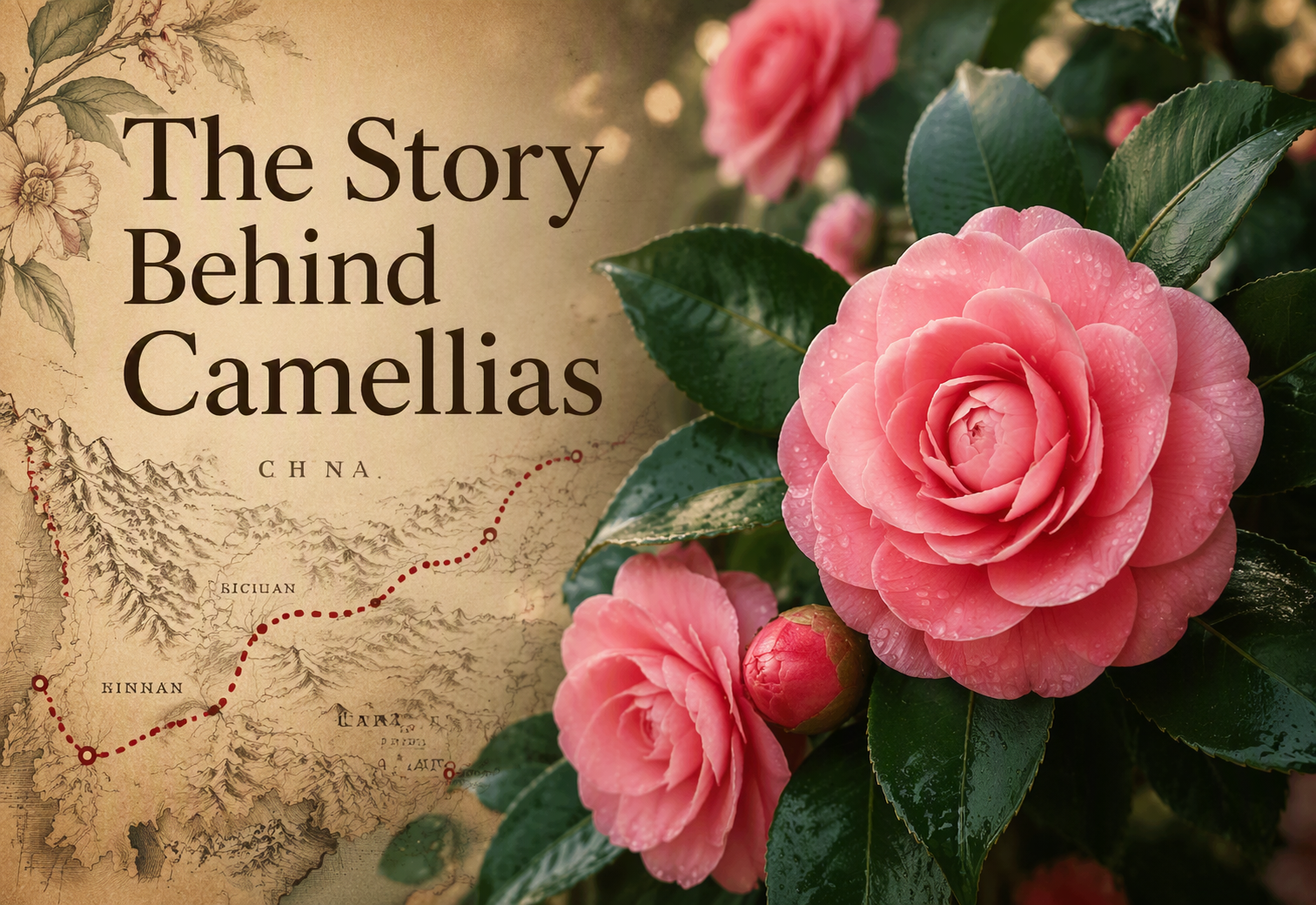
🌿 A Plant with Real History
Camellias aren’t just beautiful—they’re part of the plant hunting story.
Introduced to Britain by collectors like Ernest Wilson and Robert Fortune, they transformed British gardens and remain one of the most popular flowering shrubs today.
🌿 Bring Camellias Into Your Garden
Camellias offer:
- Reliable early colour
- Evergreen structure
- Long-term garden value
👉 Explore our range of camellias and flowering shrubs and start building a garden with both beauty and history.
❓ FAQs
Do camellias grow well in the UK?
Yes—camellias grow very well in the UK, especially in sheltered, partially shaded gardens with acidic soil.
Do camellias need ericaceous soil?
Yes—camellias require acidic (ericaceous) soil to grow properly and avoid nutrient deficiencies.
When should I prune camellias?
Prune immediately after flowering to avoid removing next year’s buds.
Why are my camellia buds falling off?
Bud drop is usually caused by frost, inconsistent watering, or sudden temperature changes.
Can I grow camellias in pots?
Yes—camellias are ideal for containers when grown in ericaceous compost with regular watering.