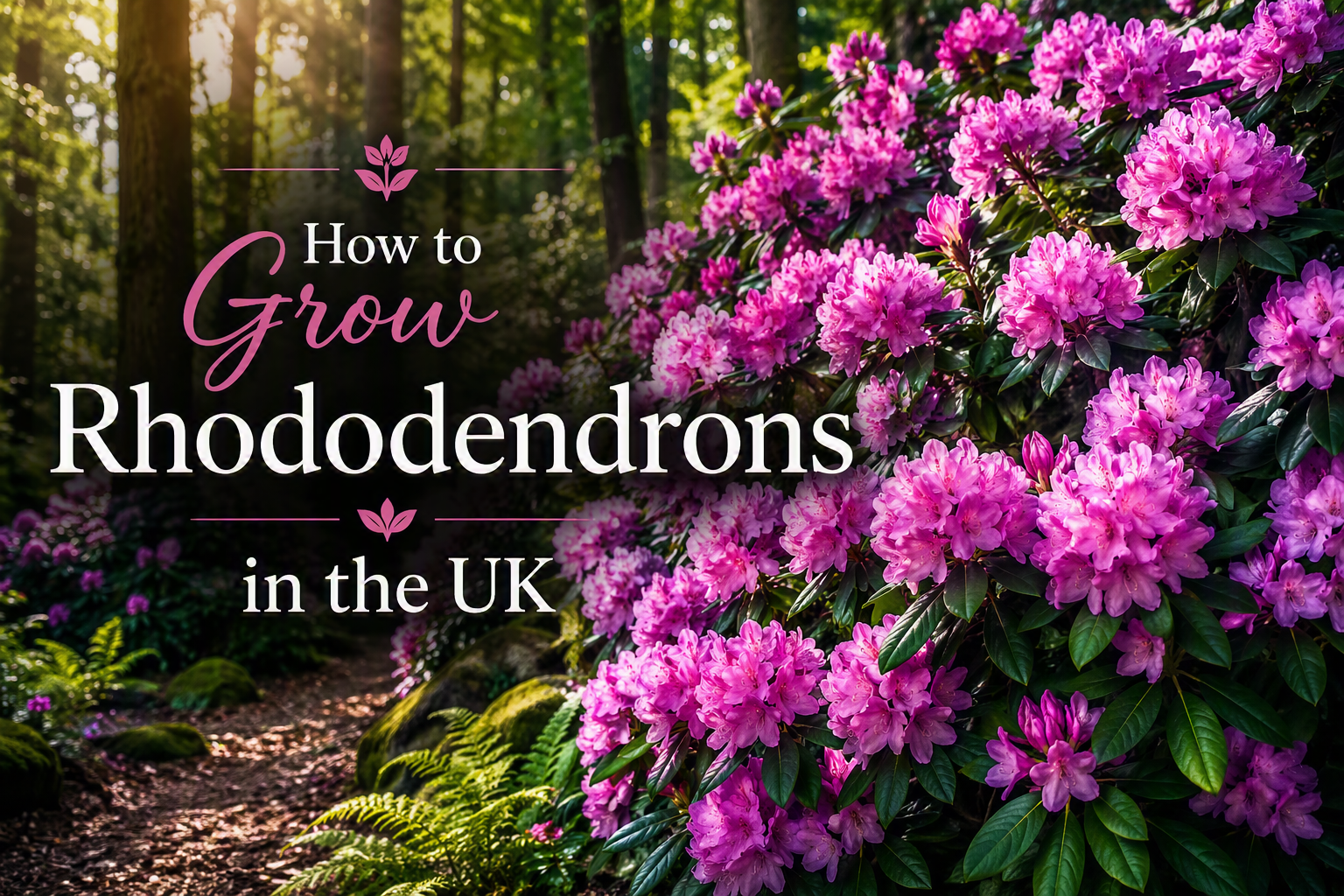
🌿 Rhododendron Growing Guide UK: How to Grow Healthy, Flowering Rhododendrons
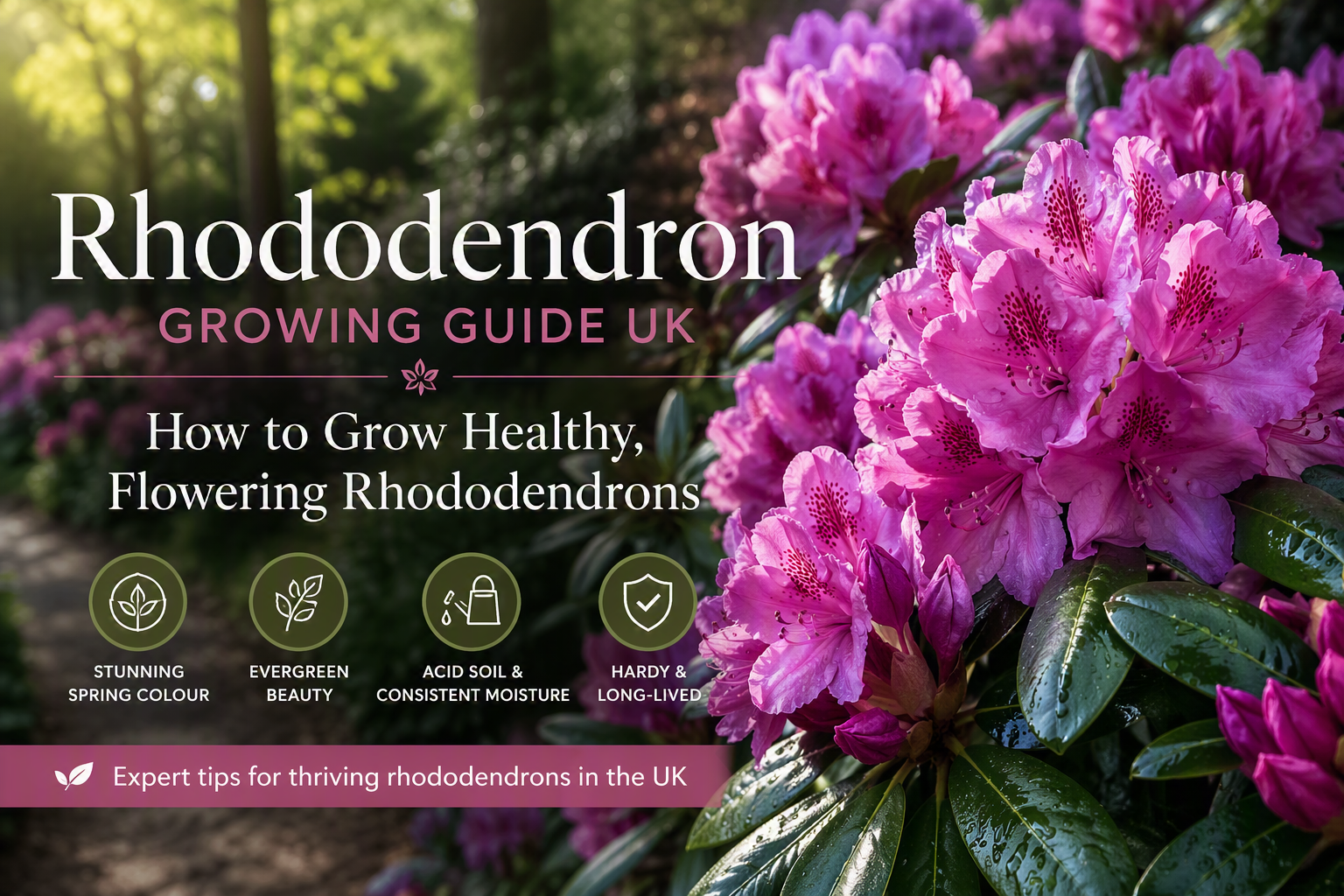
Rhododendrons are one of the most striking shrubs you can grow in the UK, producing masses of vibrant flowers in spring. With the right soil and positioning, they’re reliable, long-lived plants that can become a real centrepiece in your garden.
🌱 Choosing the Right Spot for Rhododendrons
Rhododendrons thrive when given the right balance of light and shelter.
They prefer:
- Partial shade (dappled light is ideal)
- Shelter from strong winds
- Protection from harsh midday sun
Avoid:
- Full sun (especially southern exposure in dry soil)
- Very deep shade (reduces flowering)
- Exposed sites that dry out quickly
💡 Best tip: Woodland-style conditions with light shade are perfect.
🌿 Soil Requirements: Acidic Conditions Are Key
Like camellias, rhododendrons are acid-loving plants.
They need:
- Acidic soil (pH 4.5–6)
- Moisture-retentive but free-draining soil
- High organic matter
If your soil is alkaline: 👉 Grow in raised beds or containers using ericaceous compost
⚠️ Poor soil is the biggest reason rhododendrons struggle.
💧 Watering Rhododendrons
Rhododendrons have shallow roots, so they are more sensitive to drying out.
- Keep soil consistently moist
- Water during dry spells
- Avoid waterlogging
💡 Tip: Mulch around the base to retain moisture and regulate temperature.
🌸 Feeding for Strong Growth
To keep plants healthy and flowering well:
- Use an ericaceous fertiliser in spring
- Apply mulch (bark or leaf mould) annually
- Avoid excessive feeding
This supports:
- Strong leaf colour
- Good bud development
- Overall plant health
✂️ Pruning Rhododendrons
Rhododendrons are low-maintenance when it comes to pruning.
Best practice: 👉 Remove spent flower heads (deadheading) after flowering
You can also:
- Lightly shape after flowering
- Remove damaged or crossing branches
Avoid heavy pruning unless rejuvenating an old plant.
🌸 Encouraging More Flowers
If flowering is poor, the usual causes are:
- Incorrect soil (not acidic enough)
- Too much shade
- Drought stress during bud formation
- Late frost damage
💡 Key tip: Buds form the previous year, so consistent care is essential.
⚠️ Common Rhododendron Problems (UK)
Yellow leaves
- Often nutrient deficiency from alkaline soil
- Treat with ericaceous feed
Leaf curl
- Usually caused by drought or cold stress
Poor flowering
- Too much shade or incorrect feeding
Root issues
- Caused by heavy, poorly drained soil
👉 Most problems link back to soil and moisture management.
🌱 Growing Rhododendrons in Pots
Rhododendrons grow well in containers if conditions are controlled.
Key points:
- Use large pots with good drainage
- Fill with ericaceous compost
- Water regularly (especially in summer)
- Feed annually
This is ideal for:
- Smaller gardens
- Patios
- Poor soil areas
🌿 A Plant with a Story
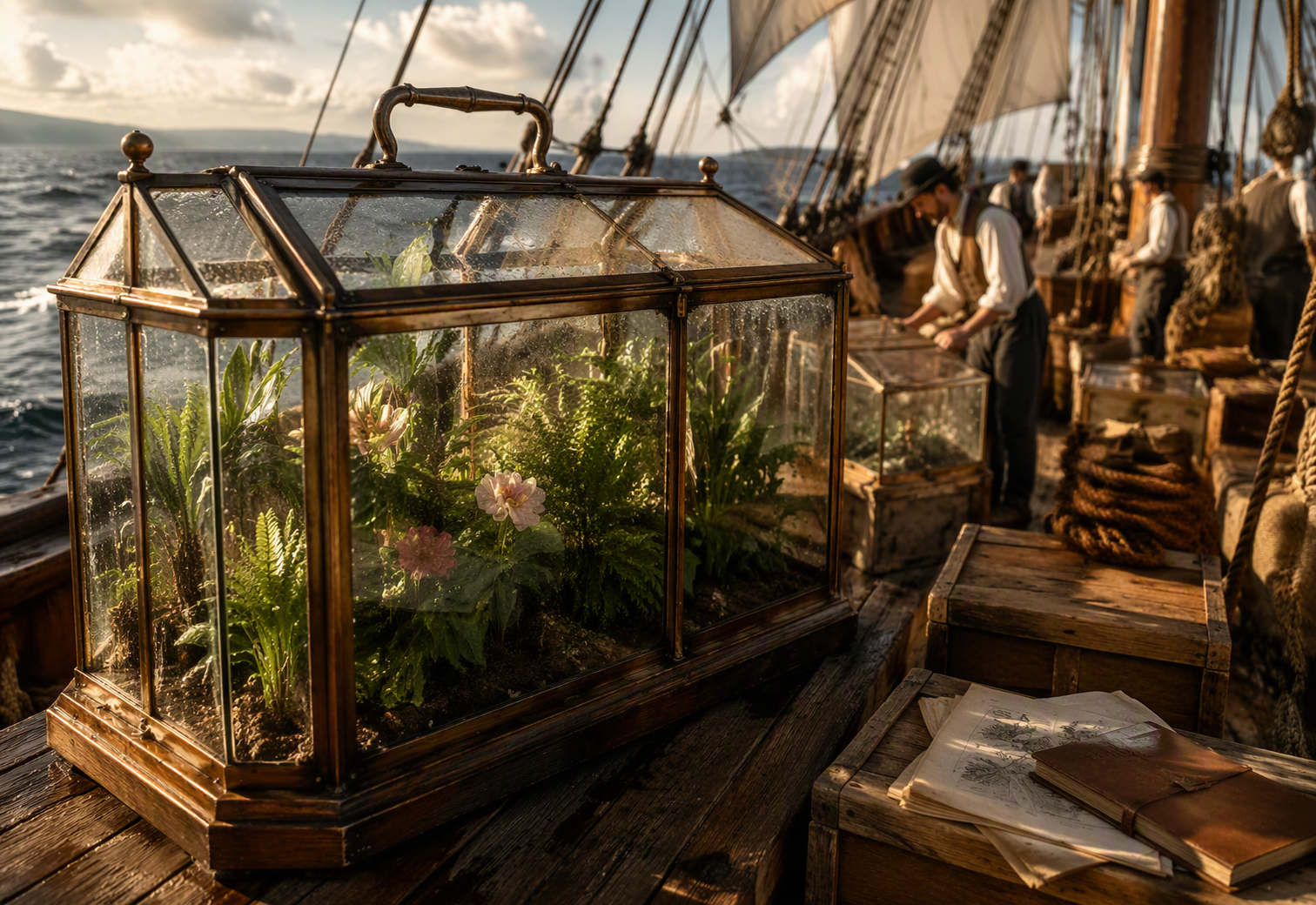
Rhododendrons are deeply connected to the plant hunters, particularly George Forrest, who introduced many of the varieties we grow today.
Their popularity in UK gardens is a direct result of those expeditions—making them as much a piece of history as a garden plant.
🌿 Bring Rhododendrons Into Your Garden
Rhododendrons offer:
- Stunning spring colour
- Structure and evergreen interest
- Long lifespan in the right conditions
👉 Explore our range of rhododendrons and flowering shrubs and create a garden inspired by the great plant hunters.
❓ FAQs
Do rhododendrons grow well in the UK?
Yes—rhododendrons thrive in UK conditions, especially in acidic soil and partial shade.
Do rhododendrons need ericaceous soil?
Yes—they require acidic soil to grow properly and avoid nutrient deficiencies.
When should I prune rhododendrons?
Light pruning and deadheading should be done after flowering.
Why are my rhododendron leaves turning yellow?
Usually due to alkaline soil or lack of nutrients—use ericaceous feed.
Can rhododendrons grow in full sun?
They can tolerate some sun, but prefer partial shade for best results.