
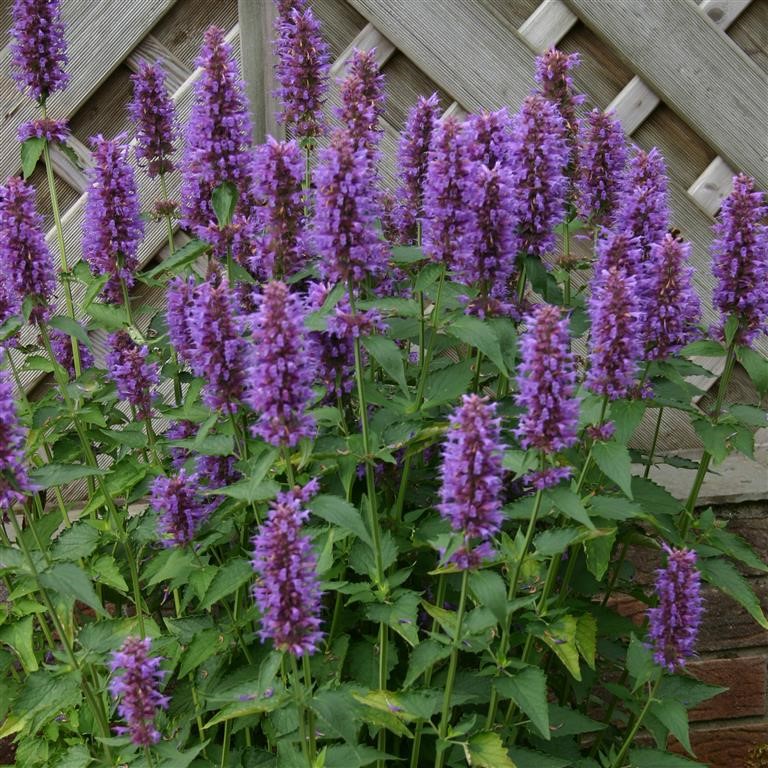
Agastache ‘Blue Boa’ – How Best to Grow This Vibrant Perennial
Agastache ‘Blue Boa’ is a show‑stopping perennial prized for its deep violet‑blue flower spikes and aromatic foliage. Loved by bees and butterflies, it’s a long‑flowering, drought‑tolerant star for sunny borders. This guide shows you exactly how to plant, grow, and care for Agastache ‘Blue Boa’ for bold summer colour.

Why Grow Agastache ‘Blue Boa’?
This award‑winning variety produces bold, long-lasting flower spikes from early summer into autumn. Its aromatic leaves add texture, while its drought resistance and wildlife appeal make it a standout in modern gardens. Perfect for hot, dry spots and pollinator plantings.
Best Planting Location
Sunlight
- Needs full sun (6–8 hours daily)
- The more sun, the more flowers
Soil
- Prefers light, sandy, or loamy soils
- Must be well-draining
- Avoid heavy clay unless improved with grit and compost
How to Plant Agastache ‘Blue Boa’
- Plant in spring after the last frost or in early autumn while the soil is warm.
- Space plants 18–24 inches apart to ensure airflow and prevent fungal issues.
- Add horticultural grit to improve drainage if needed.
Watering
After Planting
- Water deeply to help roots anchor.
Ongoing Care
- Drought‑tolerant once established
- Water only during extended dry periods
- Overwatering can lead to root problems
Fertilising
- Use a balanced, slow-release fertiliser in spring.
- Do not over‑feed — especially with nitrogen — as this reduces flowering and makes the plant leggy.
Pruning & Deadheading
Early Spring
- Cut plants back to a low framework to stimulate fresh, full growth.
Summer
- Remove spent flower spikes to extend blooming and maintain shape.
Pests & Diseases
Pests
- Generally trouble‑free
- May attract aphids or spider mites in hot, dry weather
- Treat with neem oil or insecticidal soap if required
Diseases
- Needs good airflow
- Overcrowding can cause powdery mildew
- Plant with sufficient spacing and avoid overhead watering
Winter Care
- Hardy in USDA zones 5–10
- Provide mulch in autumn to protect roots, especially in colder regions
- Leave some stems standing for winter structure and wildlife
Where Agastache ‘Blue Boa’ Shines
Perfect for:
- Sunny borders
- Mediterranean beds
- Gravel gardens
- Wildlife gardens
- Sensory gardens (fragrant foliage!)
Pairs beautifully with:
- Echinacea
- Verbena bonariensis
- Nepeta
- Ornamental grasses
Conclusion
Agastache ‘Blue Boa’ is a bold, reliable, and pollinator‑friendly perennial that adds height, colour, fragrance, and movement to sunny garden spaces. With well‑drained soil, plenty of sunlight, and light pruning, it will deliver months of vibrant blooms with minimal fuss.
FAQs – Agastache ‘Blue Boa’
1. Does Agastache ‘Blue Boa’ need full sun?
Yes. It performs best in full sun, producing stronger growth and more flowers.
2. Is it drought‑tolerant?
Once established, yes. It only needs watering in prolonged dry spells.
3. Will it grow in clay soil?
Not without improvement. Heavy clay must be amended with grit and organic matter to improve drainage.
4. Should I deadhead Agastache?
Yes. Removing spent flowers extends the flowering season.
5. When should I prune it?
Prune in early spring, cutting back to a low framework.
6. Is Agastache ‘Blue Boa’ good for wildlife?
Absolutely — bees, butterflies, and other pollinators love the nectar-rich flowers.
7. Can I grow it in pots?
Yes, if the pot has excellent drainage and is not kept overly wet.


