
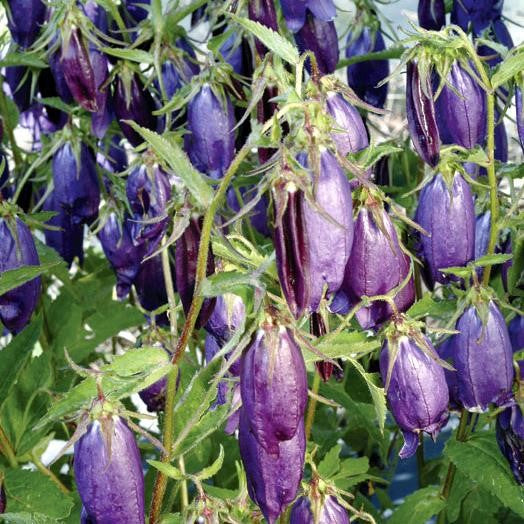
Campanula punctata ‘Sarastro’ – A Growing Guide
Campanula punctata ‘Sarastro’ is a striking, clump‑forming perennial known for its deep violet bell‑shaped flowers and long-lasting summer display. Compact, reliable, and perfect for cottage gardens or mixed borders, it’s an easy plant to grow with the right soil and moisture. This guide covers planting, care, propagation, and tips for thriving blooms.
What Is Campanula punctata ‘Sarastro’?
Common Name: Sarastro Bellflower
Type: Perennial
Family: Campanulaceae
‘Sarastro’ is prized for its large, pendulous bells in rich purple tones, often speckled inside. It forms dense clumps and flowers from late spring to early summer, sometimes repeating later in the season with deadheading.
Growing Conditions
Light
- Prefers partial shade to full sun
- In hot, exposed areas, provide afternoon shade to prevent scorching
Soil
- Grows best in fertile, well‑drained soil
- pH: Neutral to slightly alkaline
- Add compost to improve structure, but avoid waterlogged areas
Water
- Water regularly, especially during dry spells
- Keep soil moist but not saturated
Planting Campanula ‘Sarastro’
Best Time to Plant
- Spring or autumn, when temperatures are moderate
Spacing
- Space plants 12–18 inches (30–45cm) apart to allow clump expansion
Planting Depth
- Plant at the same depth as they were in their nursery pot
Care & Maintenance
Fertilisation
- Apply a balanced fertiliser in spring
- Avoid excessive feeding, which can weaken stems
Mulching
- Use organic mulch such as compost or bark fines
- Helps retain moisture and suppress weeds
Deadheading
- Remove faded blooms to:
✔ Encourage repeat flowering
✔ Maintain tidy growth
✔ Reduce self‑seeding
Pruning
- Cut back entire clumps after flowering to tidy the plant and promote fresh foliage
Pests & Diseases
Common Pests
- Aphids
- Slugs and snails (especially young growth)
Control with:
- Hand removal
- Organic pellets
- Neem oil or insecticidal soap for aphids
Diseases
- Generally disease‑resistant
- Root rot can occur in poorly drained or waterlogged soil — improve drainage to prevent this
Propagation
Division
- Divide clumps every 3–4 years in spring or autumn
- This rejuvenates older plants and creates new stock
By Seed
- Possible but slower
- Seedlings may not be true to variety
Uses in the Garden
Campanula punctata ‘Sarastro’ is excellent for:
- Mixed borders
- Cottage‑style plantings
- Shady or part‑sun areas
- Containers and patio pots
- Wildlife gardens — attracts bees and butterflies
Pairs beautifully with:
- Ferns
- Ornamental grasses
- Heuchera
- Daylilies
- Hostas
Winter Care
‘Sarastro’ is hardy, but benefits from:
- A light mulch in colder regions
- Cutting back dead foliage after frost
- Ensuring soil drains freely
It reliably returns each spring.
FAQs
Is Campanula ‘Sarastro’ hardy?
Yes — fully hardy in UK gardens when planted in well‑drained soil.
Does it grow in full shade?
It prefers partial shade but tolerates full sun with good moisture.
How tall does ‘Sarastro’ grow?
Typically 45–60cm tall with a similar spread.
Is it invasive?
No — it forms clumps but doesn’t run aggressively like some Campanulas.
Will it flower again if deadheaded?
Yes — removing spent blooms often encourages a second flush.


