
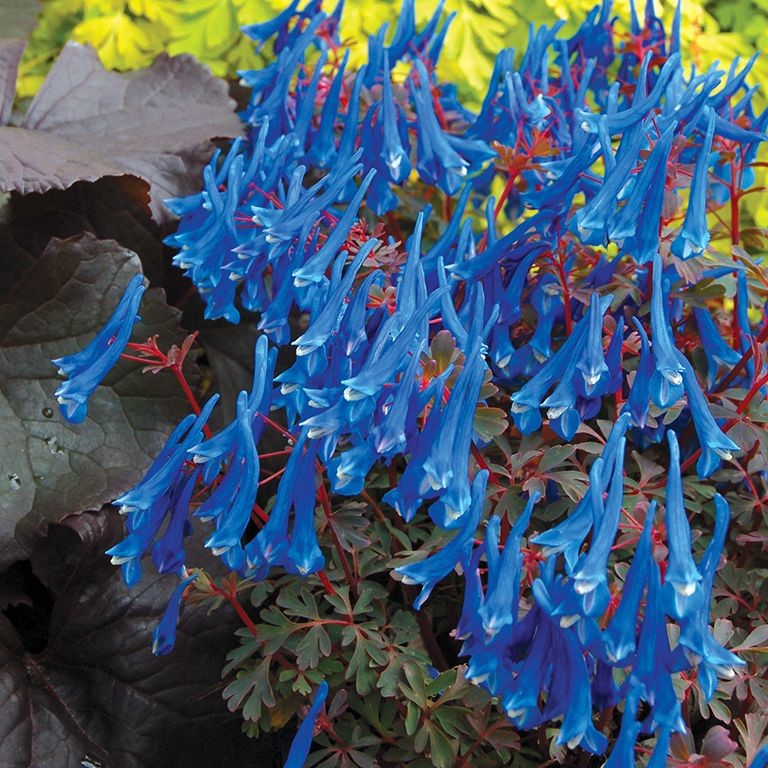
Corydalis ‘Blue Heron’ – How to Grow
Corydalis ‘Blue Heron’ is a charming shade-loving perennial known for its delicate blue flowers and soft, fern-like foliage. Blooming in spring, it brings early colour to woodland gardens and shaded borders. This guide explains how to plant, care for, and maintain this reliable, moisture-loving perennial.

About Corydalis ‘Blue Heron’
Corydalis ‘Blue Heron’ is a compact perennial valued for its sky‑blue blooms and fine, textured foliage. The plant thrives in cool, shaded areas with rich, moist soil, making it perfect for woodland gardens, north-facing borders, and part-shade planting schemes.
Growing Conditions
Light Requirements
- Prefers partial to full shade
- Direct sun can cause leaf scorch, especially in summer
Soil
- Well-drained, humus-rich soil
- Prefers slightly acidic to neutral pH
- Add compost to improve structure and moisture retention
Watering
- Keep the soil consistently moist
- Do not allow the soil to dry out
- Essential regular watering in dry spells
How to Plant Corydalis ‘Blue Heron’
Best Planting Time
- Plant in spring or autumn for strong establishment
Spacing
- Space plants 12–18 inches apart to allow spreading
Planting Depth
- Plant at the same depth as in the nursery pot
- Avoid burying the crown too deeply
Care & Maintenance
Fertilising
- Apply a balanced, slow-release fertiliser in spring
- Avoid excessive feeding, which may lead to soft growth
Mulching
- Mulch to retain moisture and regulate soil temperature
- Keep mulch clear of the stem to prevent rot
Deadheading
- Remove faded blooms to promote further flowering
- Keeps plants tidy and boosts spring display
Pests & Diseases
Pests to Watch For
- Slugs
- Snails
- Aphids
Use organic controls such as copper tape, hand-picking, or insecticidal soap.
Diseases
- Generally disease resistant
- Overwatering or poor drainage can cause root issues
Propagation
Division
- Divide clumps every few years, in spring or autumn
- Helps maintain plant vigour and prevents overcrowding
Additional Tips
Companion Planting
Corydalis ‘Blue Heron’ pairs beautifully with:
- Ferns
- Hostas
- Brunnera
- Heuchera
- Pulmonaria
Season of Interest
- Blooms in spring, sometimes again in cool summers
- Attractive foliage extends the plant’s visual value through the season
FAQs
Is Corydalis ‘Blue Heron’ evergreen?
It is semi-evergreen in mild climates but may die back in winter and return in spring.
Does Corydalis tolerate sun?
Only light morning sun. Strong direct sunlight may scorch the delicate foliage.
How tall does it grow?
Typically 20–30 cm (8–12 inches) tall with a similar spread.
Does it bloom more than once?
It blooms heavily in spring, and may repeat flower in cooler summers.


