
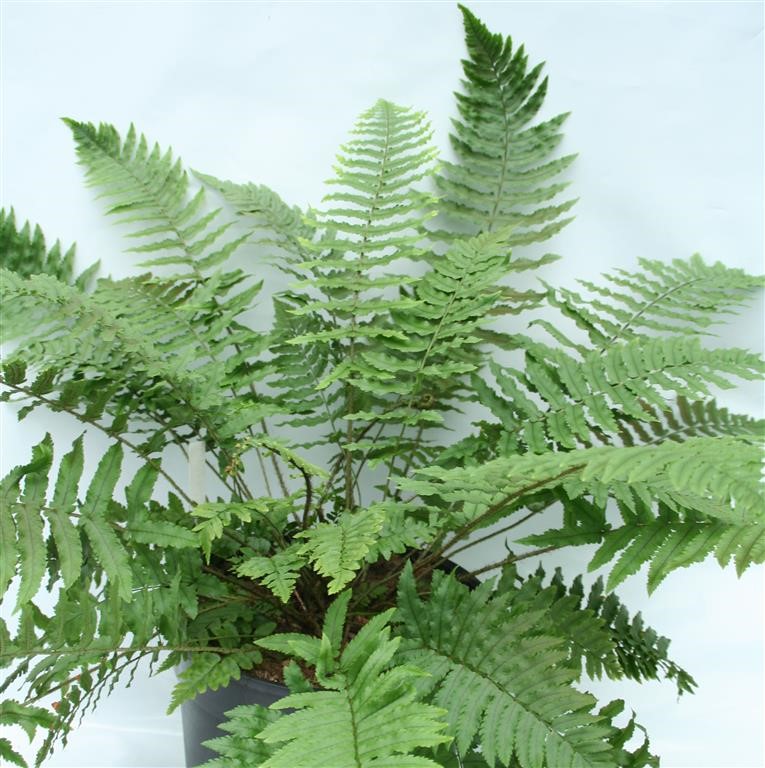
Dryopteris atrata ‘Shaggy Shield Fern’: The Complete UK Growing Guide
Dryopteris atrata, the Shaggy Shield Fern, is a hardy, architectural fern ideal for UK shaded gardens. With glossy fronds and dark, scaled stems, it brings texture and structure year‑round. This guide covers planting, care, maintenance, and tips to help you grow strong, lush ferns in your woodland or shaded borders.
Overview
If you want a bold, structural fern for shaded corners, Dryopteris atrata is an excellent choice. Known as the Shaggy Shield Fern or Black Wood Fern, it features glossy, arching fronds and dark, textured stems — perfect for woodland schemes, shaded beds, or large containers.
Key features:
- Fully hardy in the UK
- Low maintenance
- Semi‑evergreen for year-round structure
- Wildlife friendly, offering shelter for insects
Why Choose Dryopteris atrata?
Fully Hardy
Thrives in UK climates, tolerating frost, cold snaps, and damp winters.
Low Maintenance
Perfect for beginners — needs little intervention once established.
Year-Round Structure
Semi-evergreen fronds maintain shape and presence even in winter.
Wildlife Friendly
Provides habitat for insects and natural woodland biodiversity.
Ideal Growing Conditions
Position
- Partial shade to full shade
- Excellent under trees or on the north side of buildings
- Avoid harsh, drying winds
Soil
- Moist, humus‑rich, well‑drained
- Incorporate leaf mould or compost before planting
- Slightly acidic to neutral pH is ideal
Hardiness
Fully hardy UK perennial (Zones 5–8).
Planting Guide
Best Time to Plant
- Spring
- Early autumn (when the soil is naturally moist)
Spacing
- Allow 45–60 cm between plants for mature spread
Growing in Containers
- Use free‑draining, compost-rich mix
- Ensure pots have drainage holes
- Position in a shaded patio area for a lush, woodland effect
Care Tips
Watering
- Keep soil consistently moist
- Avoid waterlogging
- Water more frequently in dry spells
Mulching
- Apply organic mulch in spring to retain moisture and enrich soil
Pruning
- Remove old, damaged, or winter‑battered fronds in early spring
Feeding
- Usually not required
- Optional: light balanced feed in spring for an early boost
Division
- Divide every few years in spring or autumn to rejuvenate clumps
Seasonal Interest
Spring
New fronds emerge with dramatic, black‑scaled stems.
Summer
Forms a lush, deep‑green mound of glossy foliage.
Autumn/Winter
Semi‑evergreen in mild winters, holding structure beautifully.
Common Problems
Frond Scorch
Caused by too much sun or exposure to strong winds. Move or shelter the plant.
Dry Soil Stress
Mulch well and water in hot, dry conditions.
Pests & Diseases
Generally pest‑free and disease‑resistant — a very reliable plant.
Perfect Planting Partners
For a layered, woodland feel, pair with:
- Hostas – bold foliage contrast
- Pulmonaria – spotted leaves and spring flowers
- Epimedium – delicate ground cover beneath fronds
- Heuchera – vibrant colours under shade
Propagation
Division
The easiest and quickest method.
Divide clumps in spring or autumn.
Spores
Possible but slow. Suitable for experienced fern growers.
Why It Works So Well in UK Gardens
Dryopteris atrata thrives in the UK’s cool, moist climate. It handles deep shade, damp conditions, and winter cold extremely well — ideal for woodland schemes, shaded town gardens, and anywhere you need lush green structure without fuss.
Suggested Magefan Categories
- Plant Info
- Plant Care Guides
- Ferns
- Shade Gardening
- Beginner Essentials
- Soil & Site Conditions
- Seasonal Gardening
- Problems & Solutions
Internal Link Suggestions
- Top Shade‑Loving Perennials for Shady UK Gardens
- How to Improve Soil with Compost & Leaf Mould
- Woodland Garden Planting Ideas
- Best Ferns for UK Gardens
FAQs
Is the Shaggy Shield Fern evergreen?
Semi‑evergreen — it keeps much of its foliage through winter in mild regions.
Does it tolerate full shade?
Yes. It thrives in deep shade and woodland conditions.
Will it grow in dry shade?
Only with added compost and regular watering. It prefers moist soil.
How tall does Dryopteris atrata grow?
Typically 60–90 cm tall with a similar spread.


