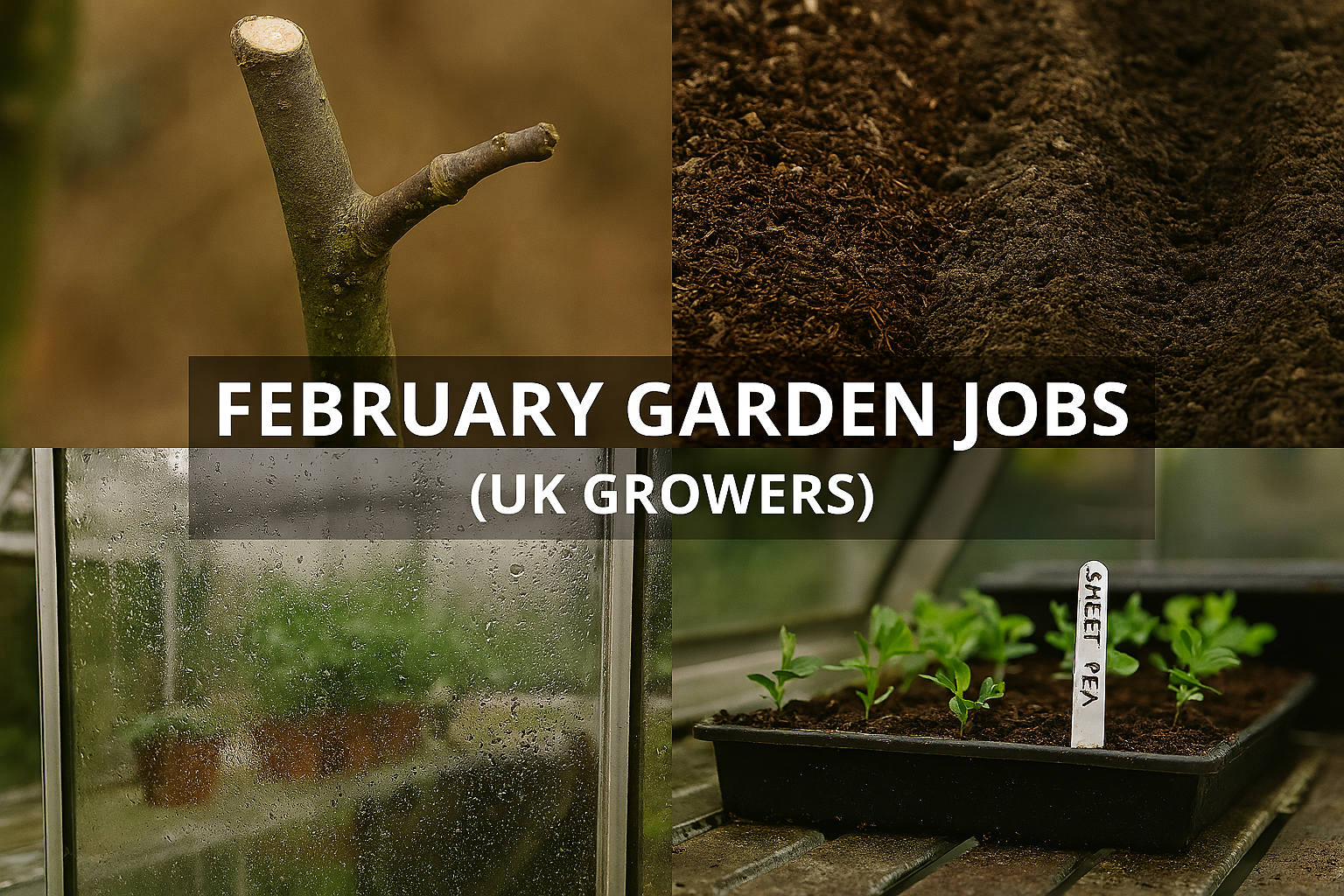
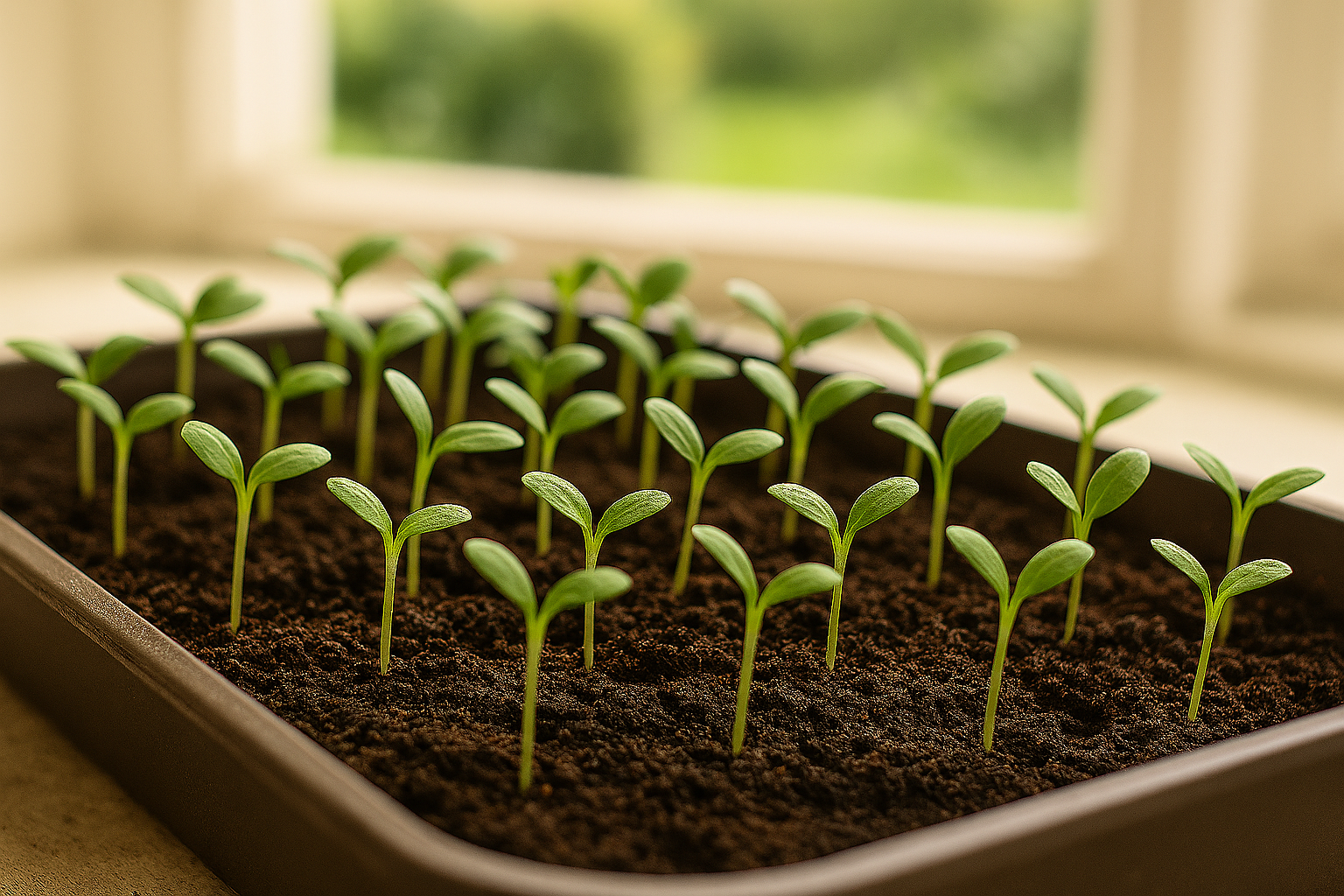
February Seed Sowing Guide (UK): What to Sow Now for Veg & Flowers
February is perfect for undercover sowing: steady warmth, bright light, and gentle moisture are your allies. Use a heated propagator (or warm windowsill), keep light at 12–14 hours to avoid legginess, and try the simple hand‑crease method below to drop seeds in a clean line — quick, precise, and beautifully “as nature intended.”
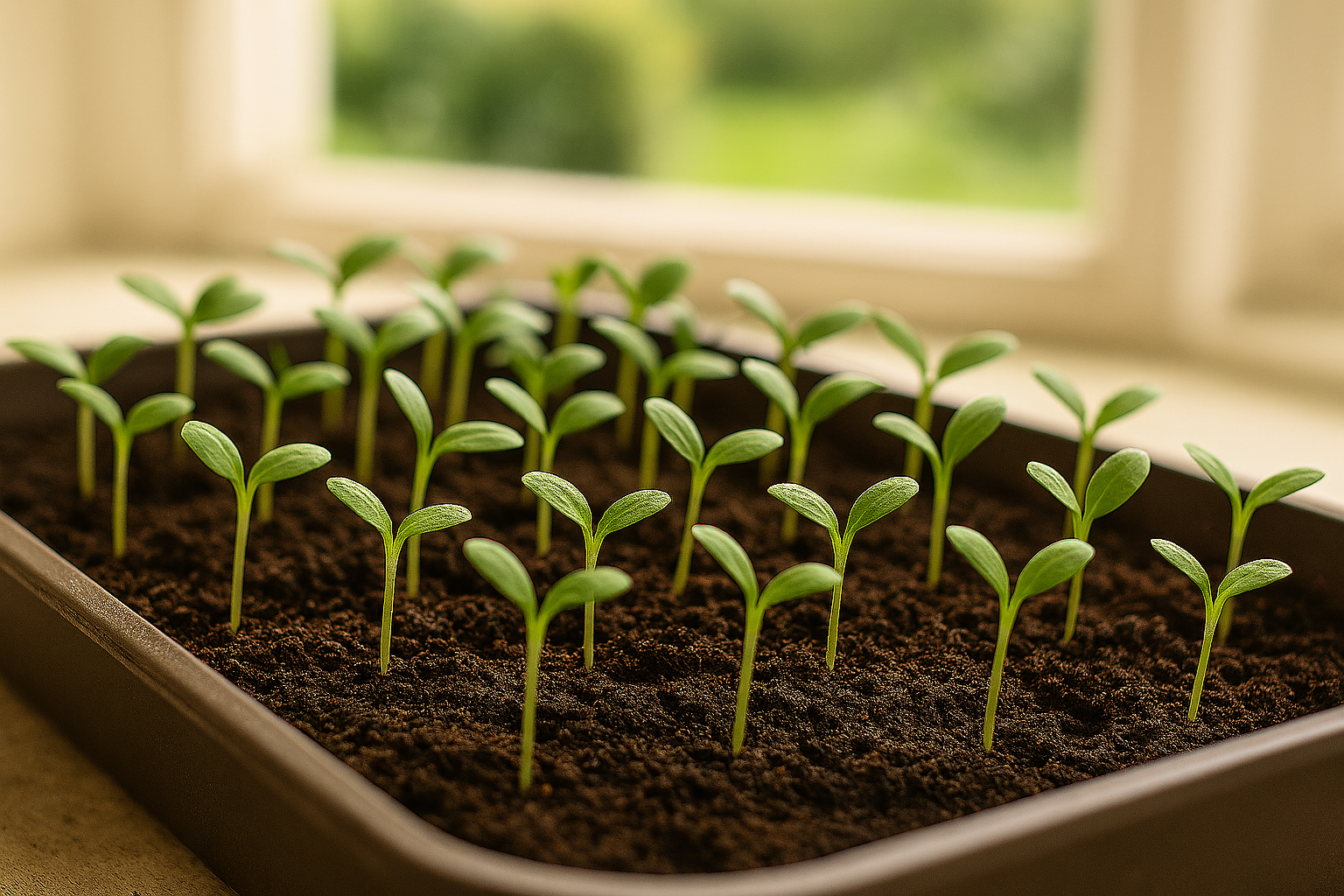
The Hand‑Crease Method (Feature Technique)
Your palm has a natural crease that acts like a micro‑gutter. It’s the fastest, neatest way to sow fine seed in straight lines without gadgets.
How to do it
- Make the channel: Fill your tray/pot with peat‑free seed compost, level lightly.
- Form the sowing “gutter”: Press the side of your hand (little‑finger edge) into the compost to the target depth, letting the main palm crease shape a shallow, straight groove.
- Load & tap: Pour a small pinch of seed into your palm above the crease. Tap the wrist/hand lightly — the seeds trickle down the crease and land in line.
- Cover & firm: Backfill with sieved compost (depth ≈ 2× seed diameter; surface‑sow true light‑germinators like lettuce). Mist to settle.
- Label & place: Label variety + date; place in propagator or a consistently warm, bright spot.
Why it works
- The crease creates a consistent drop path, spacing seeds naturally as you tap.
- Less clumping, fewer waste seeds, and easier pricking out.
What to Sow in February (UK)
Rule of thumb: In most of the UK, sow under cover (heated propagator, greenhouse, cold frame, or bright indoor window). In milder South‑West coastal spots (like Devon/Cornwall), you can start a little earlier — but still protect from frost.
Vegetables (under cover)
- Chillies & Peppers — need 18–25 °C to germinate; earlier = better cropping.
- Aubergines — warm sowing like peppers.
- Tomatoes — late Feb onward at 18–21 °C (earlier needs strong light).
- Onions/Leeks — modules or trays; prick out to cells.
- Broad Beans — modules in an unheated greenhouse/cold frame; hardy.
- Peas (early types) — modules/guttering under cover for mice protection.
- Cabbage, Cauli, Calabrese, Kale — cool‑tolerant brassicas, sow 10–15 °C.
- Lettuce, Salad Leaves, Spinach, Rocket — fast, cool‑tolerant; surface‑sow lettuce.
- Celery/Celeriac — fine seed; light + patience.
Flowers
- Sweet Peas — deep cells/Rootrainers; cool bright conditions.
- Hardy Annuals under cover: Cornflower, Calendula, Nigella, Larkspur (prechill larkspur), Ammi, Orlaya.
- Half‑hardy (with heat & good light): Antirrhinum, Lobelia, Begonia, Pelargonium (geranium). Start small batches if light is limited.
Quick Reference: Temperatures & Light
| Crop | Germination Temp | Light Notes |
|---|---|---|
| Chilli/ Pepper | 20–25 °C | Needs strong light after emergence |
| Tomato | 18–21 °C | 12–14 h to avoid legginess |
| Aubergine | 22–25 °C | Bottom heat helpful |
| Onion/Leek | 15–18 °C | Moderate light; don’t overheat |
| Lettuce | 10–18 °C | Light‑requiring; surface sow |
| Brassicas | 10–18 °C | Bright & cool to stay stocky |
| Broad Bean | 5–12 °C | Cool OK; protect from mice |
| Sweet Pea | 10–15 °C | Bright, cool; deep modules |
Setup for Success
- Compost: Fine‑textured, peat‑free seed compost; sieve a little for covering.
- Containers: Module trays for peas/beans/brassicas; seed trays for fine seed.
- Hygiene: Clean trays + fresh compost to avoid damping‑off.
- Watering: Pre‑moisten compost; then bottom‑water or mist.
- Light: 12–14 h under LEDs if indoors (20–30 cm above canopy).
- Air: Vent daily; avoid hot, humid stagnation.
Depth, Spacing & Pricking Out
- Depth: ≈ 2× seed diameter (lettuce & some herbs: surface).
- Row spacing in trays: 2–3 cm between rows for easy lifting.
- Pricking out: True leaves showing? Lift by cotyledons into cells; bury leggy tomatoes deeper to first leaves.
Common February Pitfalls (and Fixes)
- Leggy seedlings → Increase light hours/intensity; run cooler (14–16 °C) after germination; sow later if light is poor.
- Damping‑off → Better airflow; thinner sowing; sterile kit; chamomile or copper soap if needed.
- Patchy germination → Check temperature bands; keep even moisture; pre‑soak peas/sweet peas 6–12 h.
Week‑by‑Week Planner (Typical UK)
- Early Feb: Chillies, peppers, aubergines; onions/leeks; hardy annuals under cover.
- Mid Feb: Lettuce/salads; brassicas; sweet peas; first broad beans under cover.
- Late Feb: Tomatoes (if you have lights/heat); early peas in modules.
Short Version (for quick readers)
- Under cover only: Heat + light beat the weather.
- Start warm‑lovers now: Chillies/peppers/aubergines; tomatoes from late Feb.
- Cool‑tolerant winners: Onions/leeks, broad beans, peas, brassicas, lettuce.
- Hero move: Hand‑crease method — tap seeds along your palm’s crease for perfect, straight rows.
- Keep it bright: 12–14 h light; vent daily; water from below.
FAQs
Can I direct‑sow outdoors in February?
Generally no — soil is cold and wet. Use modules under cover; harden off later.
Do I need grow lights?
For chillies/peppers/tomatoes started this early, yes. Otherwise expect legginess.
What compost is best?
A fine, peat‑free seed compost. Feed lightly once true leaves appear.
How warm is “warm enough”?
Chillies/peppers/aubergines prefer 20–25 °C to germinate; tomatoes 18–21 °C. Cool crops (brassicas, lettuce) are happy at 10–18 °C.
When can these go outside?
After last frost and hardening off for 10–14 days. In the South‑West that’s often late March/April, but watch local forecasts.
Call to Action
Ready to grow? Start a tray today using the hand‑crease sowing method and line up perfect seedlings. Then share a quick reel for your audience showing the tap‑to‑drop trick — it’s wonderfully visual and saves time.


.png)
.png)