
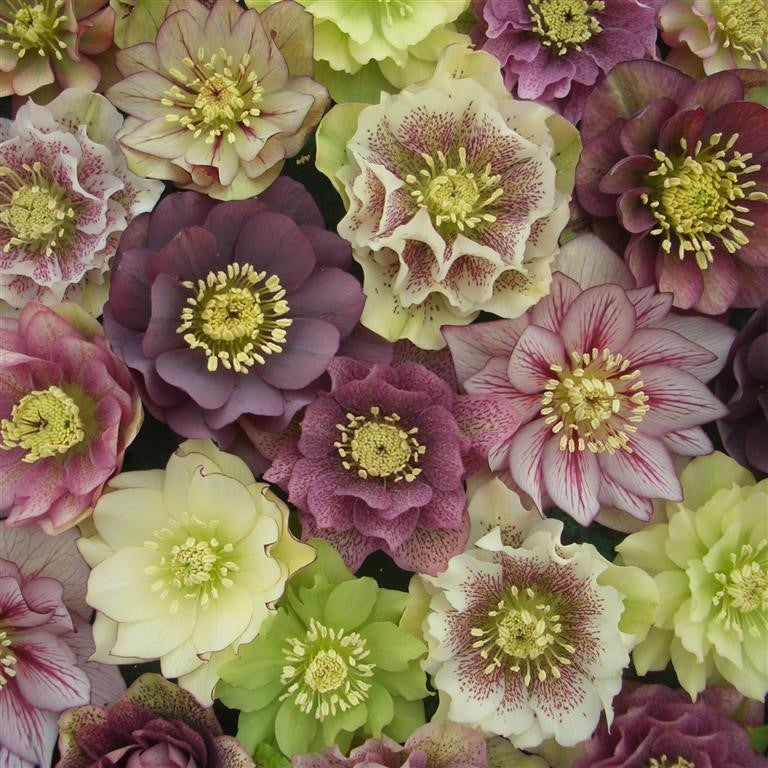
Hellebore ‘Double Queen Mixed’ – A Growing Guide for Stunning Winter Blooms
Hellebore ‘Double Queen Mixed’ is one of the most elegant winter‑flowering perennials you can grow. This guide covers everything—from planting and care to pruning, pests, and propagation—so your plants thrive and bloom beautifully year after year.

What Makes Hellebore ‘Double Queen Mixed’ Special?
Hellebore ‘Double Queen Mixed’ produces breath‑taking double flowers in a wide range of colours—creams, purples, pinks, greens, and spotted forms. Flowering from late winter into spring, they bring life to the garden when little else is blooming. They’re long‑lived, evergreen, low‑maintenance, and perfect for shady areas.
Best Planting Location
Light
- Prefers partial to full shade.
- Avoid hot afternoon sun, which can scorch leaves.
Soil
- Rich in organic matter, free‑draining.
- Neutral to slightly alkaline pH gives best results.
- Add leaf mould or compost at planting.
Climate
- Hardy in USDA zones 4–9.
- Perfect for UK gardens, especially woodland or sheltered spots.
How to Plant Hellebore ‘Double Queen Mixed’
When to Plant
- Early spring or autumn is ideal.
Spacing
- Allow 12–18 inches per plant for airflow and mature shape.
Planting Depth
- Set the crown at soil level—planting too deep reduces flowering.
Watering Requirements
- Water regularly during establishment and dry spells.
- Keep the soil moist but never waterlogged.
- Always water at the base to avoid leaf fungal issues.
Fertilising for Best Blooms
- Apply a balanced, slow‑release fertiliser in early spring.
- A single yearly feed is usually enough for strong flowering.
Pruning & Maintenance
Late Winter/Early Spring
- Remove old, damaged, or blackened leaves to prevent disease.
- This gives space for new flower stems.
Post‑Bloom Care
- Trim back spent flowers once they fade.
- Helps direct energy into fresh growth.
Common Pests & Diseases
Pests
- Aphids
- Slugs (especially on young growth)
Use neem oil or insecticidal soap if needed.
Diseases
- Fungal issues occur in damp, congested conditions.
- Ensure good spacing and avoid overhead watering.
Extra Growing Tips
Mulching
- Add a generous mulch of leaf mould or compost to retain moisture and enrich soil.
Companion Planting
Pair beautifully with:
- Ferns
- Hostas
- Snowdrops
- Early bulbs
- Woodland perennials
Winter Care
- In colder areas, mulch crowns lightly to protect during hard freezes.
Propagation Methods
From Seed
- Collect seeds in late summer.
- Sow fresh in a cold frame for natural stratification.
Division
- Divide every 3–4 years in early spring.
- Ideal for refreshing old clumps or increasing stock.
Conclusion
Hellebore ‘Double Queen Mixed’ is a winter gem—reliable, elegant, and incredibly rewarding. With the right shade, soil, and seasonal care, these perennials will grace your garden with dazzling double flowers for many years. A must‑have for anyone creating year‑round interest.
FAQs – Hellebore ‘Double Queen Mixed’
1. Do Hellebore ‘Double Queen Mixed’ plants prefer sun or shade?
They grow best in partial to full shade. Morning sun is fine, but avoid harsh afternoon sunlight which can scorch the leaves.
2. When is the best time to plant Hellebores?
The ideal planting times are early spring or autumn, when the soil is cool and moist.
3. How often should I water them?
Water regularly during dry periods, keeping the soil moist but not waterlogged. Once established, they’re quite drought‑tolerant.
4. Why aren't my Hellebores flowering?
Common reasons include:
- Being planted too deep (crown must be at soil level)
- Not enough light
- Young plants needing more time
- Nutrient‑poor soil (apply spring fertiliser)
5. Do Hellebores stay evergreen?
Yes—Hellebores are generally evergreen perennials, though older leaves may blacken or decline in winter.
6. Should I cut back the old leaves?
Yes. Remove damaged or old foliage in late winter/early spring to prevent disease and allow flowers to shine.
7. Are Hellebores safe for pets?
All Hellebores, including ‘Double Queen Mixed’, are toxic if ingested. Plant with care around pets and children.
8. What pests or diseases affect them?
Aphids, slugs, and occasional fungal leaf spot. Good airflow and base‑watering help reduce problems.
9. Can I grow Hellebores in pots?
Absolutely. Use a large, deep pot with high‑quality compost and ensure excellent drainage.
10. How do I propagate Hellebore ‘Double Queen Mixed’?
- Seeds: Collect in late summer and sow fresh.
- Division: Every 3–4 years in early spring.


