
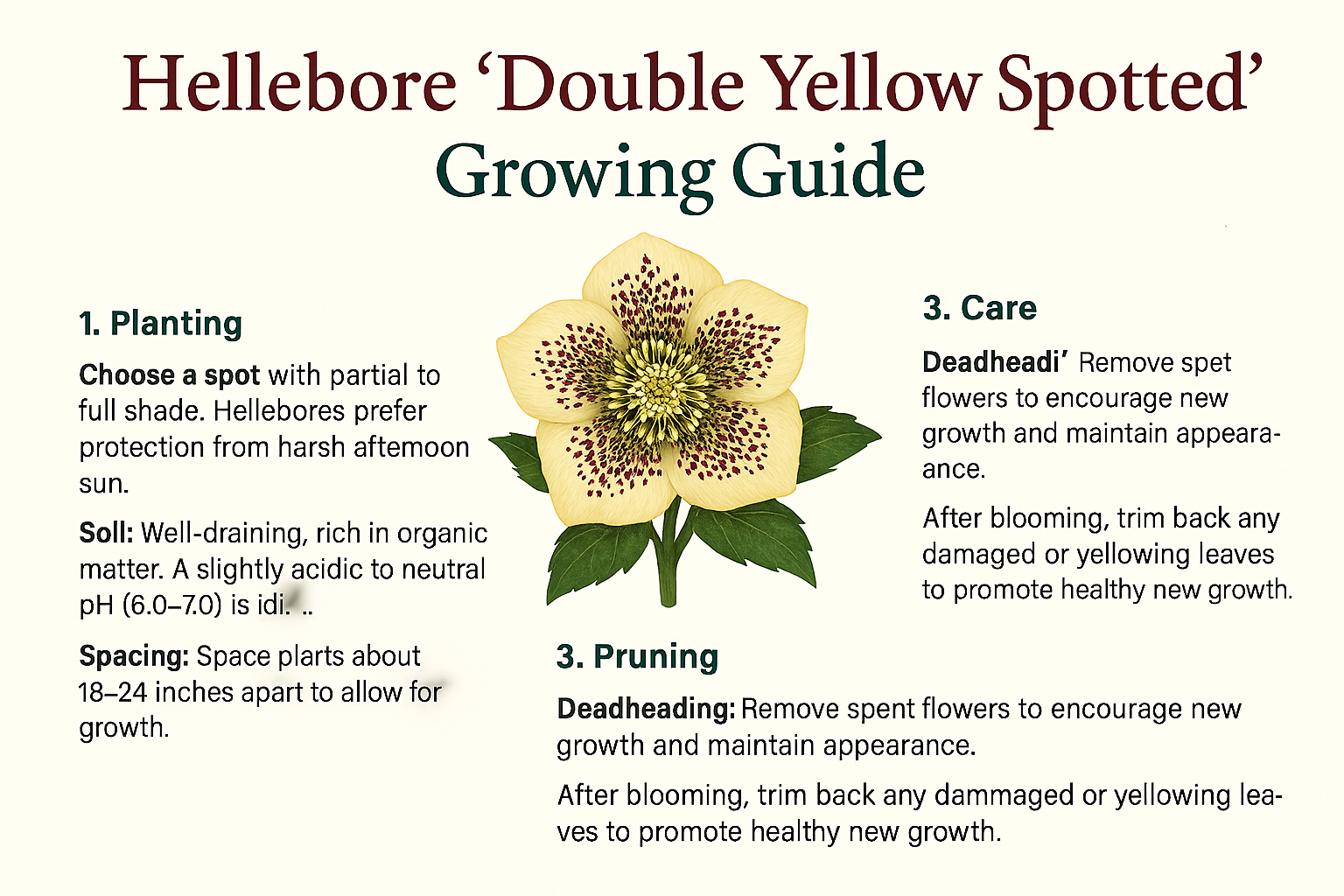
Hellebore ‘Double Yellow Spotted’: Growing Guide for Stunning Early Spring Colour
Hellebore ‘Double Yellow Spotted’ is a standout perennial for shade gardens, producing elegant double blooms in late winter and early spring. Here’s how to plant, care for and enjoy this long‑lived, shade‑tolerant favourite.

Why Grow Hellebore ‘Double Yellow Spotted’?
This beautiful hellebore features:
- Double, layered yellow flowers heavily speckled in burgundy
- Evergreen foliage that looks attractive year‑round
- Excellent cold tolerance and early flowering
- The ability to brighten shady areas from January to March
- A long lifespan with minimal fuss once established
A perfect perennial to add structure and winter interest to shaded gardens.
Choosing the Right Planting Location
Light Requirements
- Partial to full shade
- Avoid harsh afternoon sun
- Thrives in woodland-style conditions or dappled shade beneath shrubs
Soil Needs
- Moist but well‑draining soil
- Rich in organic matter
- Slightly acidic to neutral (pH 6.0–7.0)
- Improve heavy soils with grit and compost
Spacing
Plant 18–24 inches apart to give room for mature clumps.
How to Plant Hellebore ‘Double Yellow Spotted’
When to Plant
- Best planted in autumn or spring
- Autumn planting ensures flowering the following late winter
Planting Steps
- Dig a hole slightly wider than the pot
- Plant at the same depth as the nursery pot
- Backfill with enriched soil
- Water well to settle the roots
- Add mulch to retain moisture
Care & Maintenance
Watering
- Keep soil consistently moist, especially in the first year
- Water during dry spells
- Avoid waterlogging, as roots prefer moisture with drainage
Feeding
Apply a slow‑release, balanced fertiliser in early spring as new growth emerges.
Mulching
- Mulch annually with leaf mould, compost or bark
- Helps retain moisture and suppress weeds
Pruning Hellebores
Deadheading
- Remove spent flowers to tidy plants
- Encourages fresh growth and reduces self‑seeding
Foliage Care
- Trim away old, damaged or yellowing leaves after blooming
- Improves airflow and reduces fungal problems
- Helps showcase new spring blooms
Pests & Diseases
Common Pests
- Slugs
- Aphids
Control using: - Organic pellets
- Hand‑picking
- Insecticidal soap
Fungal Issues
Watch for:
- Powdery mildew
- Leaf spot
Prevent by:
- Ensuring good air circulation
- Avoiding overhead watering
- Removing affected leaves promptly
Propagation
Seed Propagation
- Can be grown from seed
- Seeds require cold stratification to germinate
- Seedlings often vary from the parent plant
Division
- Divide clumps in early spring or late summer
- Best method for keeping true to type
- Replant immediately after division
Additional Growing Tips
Companion Plants
Hellebores pair beautifully with:
- Ferns
- Hostas
- Brunnera
- Astilbes
- Heuchera
Winter Care
- Generally hardy across the UK
- A light winter mulch protects roots in very cold areas
- Evergreen foliage offers structure even in winter
Why Gardeners Love This Variety
Hellebore ‘Double Yellow Spotted’ offers:
- Stunning early blooms
- Low maintenance
- Evergreen presence
- Shade garden performance
- Great longevity and resilience
Ideal for woodland borders, underplanting shrubs, or bringing winter brightness to darker spaces.
FAQs
When does it flower?
Typically January–March, depending on weather.
Do hellebores like sun?
They prefer partial–full shade, especially afternoon shade.
Are hellebores evergreen?
Yes, most varieties including this one retain foliage year‑round.
Do they grow well in pots?
Yes — use deep, rich, well‑draining compost and water consistently.


