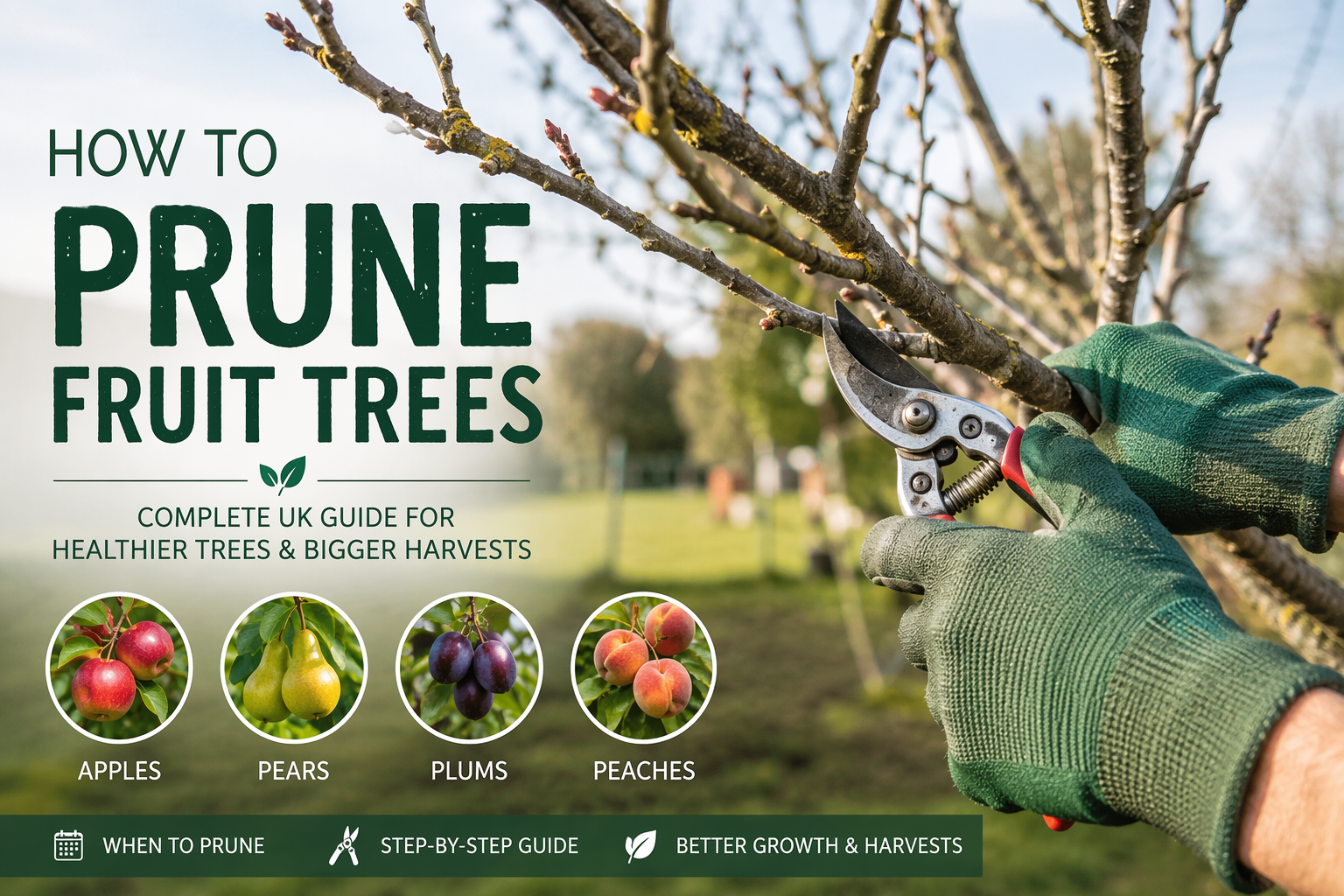
How to Prune Fruit Trees: Complete UK Guide for Healthier Trees & Bigger Harvests
Pruning fruit trees is one of the most important tasks for keeping trees healthy, productive and easy to manage. Proper pruning improves airflow, increases sunlight penetration, reduces disease problems and encourages the growth of strong fruit-bearing branches. Whether you're growing apples, pears, plums, peaches or nectarines, knowing when and how to prune can significantly improve your harvests.
Quick Answer: When Should You Prune Fruit Trees?
Most fruit trees should be pruned during late winter or early spring while they are dormant and before new growth begins. Apples and pears respond particularly well to winter pruning. Cherries and plums are often best pruned in summer to help reduce the risk of fungal diseases such as silver leaf. Autumn pruning is generally avoided because it can stimulate soft new growth that may be damaged by winter frosts.
Why Pruning Fruit Trees Matters
Regular pruning offers several important benefits:
- Encourages healthy growth
- Improves fruit size and quality
- Increases air circulation
- Allows more sunlight into the canopy
- Reduces disease risks
- Makes harvesting easier
- Maintains a manageable tree size
A well-pruned fruit tree will often produce healthier crops and remain productive for many years.
Essential Pruning Tools
Before starting, ensure you have the right equipment:
- Secateurs for small shoots and stems
- Loppers for thicker branches
- Pruning saw for larger limbs
- Gardening gloves
- Safety glasses
- Disinfectant for cleaning tools between cuts
Sharp, clean tools create better cuts and reduce the risk of spreading disease between trees.
Understanding Fruit Tree Shapes
Different fruit trees are commonly trained into different forms.
Open Centre (Vase Shape)
Ideal for:
- Plums
- Peaches
- Nectarines
This shape allows sunlight to reach the centre of the tree and promotes air circulation.
Central Leader
Ideal for:
- Apples
- Pears
This structure keeps one dominant trunk with evenly spaced side branches, creating a strong framework for future fruit production.
Step-by-Step Guide to Pruning Fruit Trees
1. Remove Dead, Damaged or Diseased Wood
Always begin by removing:
- Dead branches
- Diseased growth
- Broken limbs
Cut back to healthy wood wherever possible.
2. Remove Suckers and Water Shoots
Suckers grow from the base of the tree, while water shoots are vigorous upright stems growing from branches or the trunk.
These growths divert energy away from fruit production and should usually be removed.
3. Thin Crowded Growth
Look for branches that:
- Cross over each other
- Rub together
- Grow inward
- Point downwards
Removing these improves airflow and light penetration.
4. Maintain the Tree's Structure
Focus on developing strong scaffold branches which form the permanent framework of the tree.
Ideally, select three to five well-spaced branches to create a balanced structure.
5. Encourage Future Fruiting
Prune carefully to promote healthy fruiting wood while preserving productive branches and fruiting spurs where appropriate.
Thinning Cuts vs Heading Cuts
Thinning Cuts
A thinning cut removes a branch back to its point of origin.
Benefits include:
- Better airflow
- Improved light penetration
- Less congestion
- Reduced branch rubbing
Heading Cuts
A heading cut shortens a branch back to a bud.
Benefits include:
- Encouraging branching
- Stimulating new growth
However, overusing heading cuts can create dense growth, so they should be used carefully.
Pruning Young and Mature Trees
Young Trees
Young fruit trees require formative pruning.
The goal is to develop:
- A strong framework
- Good branch spacing
- Balanced growth
Mature Trees
Older trees benefit more from selective thinning.
Avoid excessive pruning, which may stimulate large amounts of vigorous but unproductive growth.
Fruit Tree Aftercare
After pruning:
- Dispose of diseased material
- Apply mulch around the root area
- Water during dry periods
- Monitor for pests and diseases
- Keep the trunk clear of mulch contact.
Healthy soil and good aftercare help trees recover more quickly from pruning.
Common Fruit Tree Pruning Mistakes
Avoid these frequent mistakes:
- Removing too much growth at once
- Leaving branch stubs
- Pruning during autumn
- Ignoring signs of disease
- Creating overcrowded regrowth with excessive heading cuts
As a general rule, avoid removing more than around 20–30% of the canopy in a single pruning session.
Companion Plants for Fruit Trees
Growing companion plants around fruit trees can improve biodiversity and attract pollinators.
Good choices include:
- Lavender
- Chives
- Thyme
- Oregano
- Yarrow
- Marjoram
These plants help attract bees and beneficial insects while adding interest to orchard and garden spaces.
Related Products
- Fruit Trees
- Herb Plants
- Lavender Plants
- Pollinator-Friendly Perennials
- Organic Compost
- Wildlife-Friendly Plants
Related Posts
- How to Grow Fruit Trees in Small Gardens
- Best Pollinator Plants for UK Gardens
- Creating a Wildlife-Friendly Garden
- Spring Garden Maintenance Checklist
- Growing Culinary Herbs Successfully
FAQs
Can I prune fruit trees in summer?
Yes. Summer pruning is often used to control size, improve airflow and remove unwanted growth. Cherries and plums are commonly pruned during summer.
Why should fruit trees not be pruned in autumn?
Autumn pruning can stimulate tender new growth which may be damaged by winter frosts.
How often should fruit trees be pruned?
Most fruit trees benefit from annual pruning to maintain their shape, health and fruit production.
Can over-pruning damage a fruit tree?
Yes. Removing too much growth can stress the tree and encourage vigorous but unproductive regrowth.
Should I use pruning sealant?
Most modern pruning advice suggests making clean cuts and allowing them to heal naturally rather than applying sealants.
What is the 3-cut method?
The 3-cut method is commonly used when removing larger branches to prevent bark tearing and create a cleaner final cut.
Final Thoughts
Learning how to prune fruit trees correctly is one of the best investments you can make in the long-term health of your garden. By pruning at the right time, using the correct techniques and maintaining a strong tree structure, you can enjoy healthier growth, better harvests and easier tree management for years to come.