
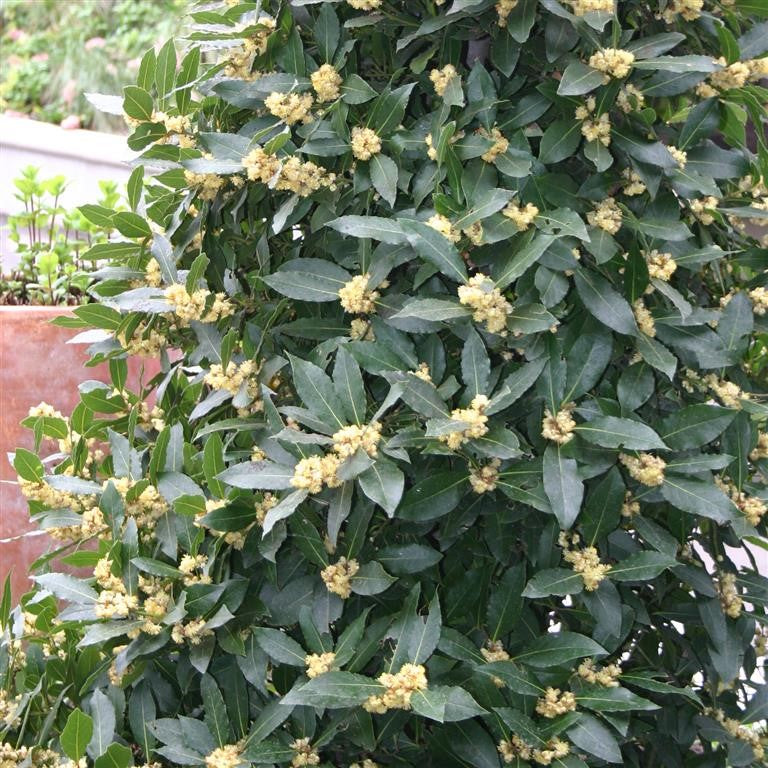
How to Grow Laurus nobilis (Bay Laurel): Complete Guide for UK Gardens & Kitchens
Laurus nobilis — commonly known as bay laurel or kitchen bay — is a timeless evergreen herb prized for its aromatic leaves and elegant form. Whether grown in pots, borders or a kitchen garden, bay is a rewarding plant that offers both culinary and ornamental value. This guide covers planting, watering, feeding, pruning, winter care and pest prevention for strong, healthy growth.

1. Choosing the Right Location
Sunlight
Bay thrives in full sun, ideally receiving 6+ hours of light daily.
It will tolerate partial shade, especially in hotter months.
Soil
Well-drained soil is crucial to prevent root problems.
Use:
- Potting compost + horticultural sand/grit
- Or a loamy soil rich in organic matter
Avoid heavy, waterlogged soil at all costs.
2. Planting Bay Laurel
Seeds or Cuttings
You can grow bay from:
- Seeds — soak for 24 hours before planting
- Semi‑ripe cuttings — faster, more reliable than seeds
Spacing
Outdoors, space plants 3–4 feet apart to allow for mature growth and airflow.
Planting Depth
Plant at the same depth as it was in its pot.
Dig a hole slightly wider than the root ball and backfill with improved soil.
3. Watering
Frequency
- Keep soil evenly moist, especially in warm weather.
- Allow the top inch of soil to dry slightly between waterings.
- Avoid constant wet soil — bay roots dislike soggy conditions.
Humidity Needs
Bay prefers moderate humidity.
If grown indoors or in a dry location, lightly mist foliage occasionally.
4. Feeding & Fertilising
During Growing Season (Spring–Summer)
Feed every 4–6 weeks with:
- A balanced slow‑release fertiliser, or
- Organic compost, worm castings, or well‑rotted manure
Avoid excessive feeding — bay is slow-growing and prefers modest nutrition.
5. Pruning & Shaping
When to Prune
- Late winter or early spring before new growth begins
- Light shaping can also be done in mid-summer
How to Prune
- Remove dead, damaged or crossing stems
- Trim tips to maintain shape
- Bay responds well to clipping and can be trained into balls, cones or standards
Good pruning encourages denser, bushier growth.
6. Pests & Diseases
Common Pests
- Aphids
- Spider mites
- Scale insects
Control with:
- Neem oil
- Insecticidal soap
- A strong spray of water on smaller infestations
Disease Prevention
- Avoid stagnant air
- Ensure excellent drainage
- Water at the base to keep foliage dry
Root rot is the main threat — keep soil lightly moist but never saturated.
7. Harvesting Bay Leaves
When to Harvest
Once the plant is well established (usually after year one).
How to Harvest
Pick mature, healthy leaves as needed.
Fresh or dried, they’re perfect for soups, stews, stocks and marinades.
Frequent light harvesting helps keep the plant compact.
8. Winter Care
For Potted Bay
Move indoors before frosts arrive.
Place in a:
- Cool, bright porch
- Unheated conservatory
- Frost-free greenhouse
Avoid radiators, drafts or dark corners.
Ground-Grown Bay
- Mulch the base thickly in winter
- Plant in a sheltered spot, ideally against a warm wall
- Mature plants are hardy but young ones need protection
Conclusion
With the right sunlight, drainage and simple seasonal care, Laurus nobilis becomes a long-lasting and highly rewarding plant. Its aromatic leaves enhance countless recipes, and its glossy foliage adds year-round structure to gardens and patios. Whether grown in a kitchen pot or shaped into a garden feature, bay laurel is a versatile essential for UK gardeners and cooks alike.
FAQs
Q: Is bay laurel hardy in the UK?
A: Yes — mature plants are generally hardy, but young plants and container-grown specimens need winter protection.
Q: Can bay be grown indoors?
A: Yes, if given bright light and good airflow. Avoid hot, dry rooms.
Q: How fast does bay grow?
A: Bay is slow-growing but steady, making it ideal for pruning and shaping.
Q: When should I repot my bay?
A: Every 2–3 years, or when the pot feels root-bound.


