
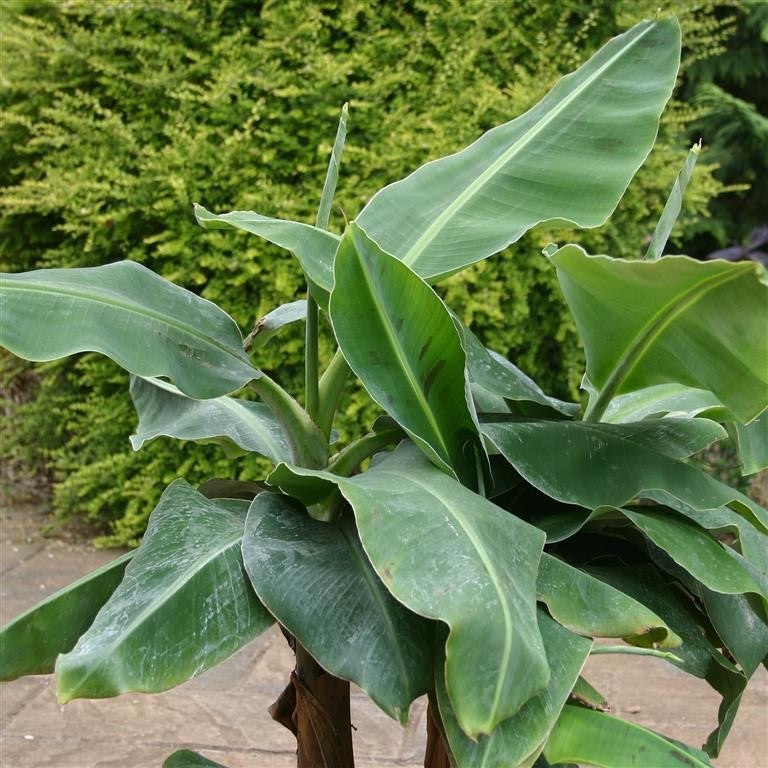
Musa ‘Dwarf Cavendish’ is a compact banana plant loved for its tropical leaves and delicious fruit potential. Ideal for patios, greenhouses, and indoor growing, it thrives with warmth, regular moisture, and rich soil. This guide covers everything you need to grow strong, healthy banana plants at home — even in cooler climates.

Musa ‘Dwarf Cavendish’ Growing Guide
1. Choosing the Right Location
- Sunlight: Full sun — at least 6–8 hours a day
- Shelter: Keep out of strong winds; large leaves tear easily
- Best positions: Conservatories, warm patios, bright greenhouses, or sunny rooms indoors
2. Soil Preparation
- Soil type: Well‑draining loamy soil, rich in organic matter
- Ideal pH: 5.5–7.0
- Amendments: Add compost, leaf mould, or well‑rotted manure for best growth
- Avoid heavy clay or waterlogged soil — bananas hate sitting in wet conditions
3. Planting Musa ‘Dwarf Cavendish’
- Spacing: 3–4 ft between plants if growing multiples
- Planting depth: Level with its original pot depth
- After planting: Water thoroughly to settle the soil
Tip: Planting in large containers helps maintain warmth and moisture.
4. Watering Requirements
- Keep soil consistently moist
- Water deeply 1–2 times per week depending on weather
- Never allow the plant to stand in water — root rot develops quickly
- Increase watering during hot spells and summer growth flushes
5. Fertilising
- Feed every 4–6 weeks during the growing season
- Use a balanced feed like 10‑10‑10
- Organic options: worm castings, fish emulsion, seaweed feed
- Bananas are heavy feeders — regular nutrition boosts leaf size and fruiting potential
6. Mulching
- Add a thick layer of mulch around the base
- Helps retain moisture, maintain warmth, and improve soil quality
- Options: bark, compost, or straw
7. Pruning & Maintenance
- Remove damaged, yellowing, or torn leaves
- Cut out old leaves to improve airflow
- Keep the area around the base clean to reduce pests
8. Pests & Diseases
Common Pests:
- Aphids
- Spider mites
- Mealybugs
Treat with: neem oil, horticultural soap, or a gentle organic spray.
Diseases:
- Black Sigatoka (leaf fungus): remove affected leaves, increase airflow
- Root rot: caused by waterlogging — improve drainage immediately
9. Harvesting Bananas
- Bananas ripen 75–80 days after flowering
- Fruit should be plump and the flower ends dried
- Harvest while still green — they ripen off the plant
- Cut the whole bunch and leave in a warm room to ripen naturally
10. Overwintering
In cooler climates (like the UK):
- Potted plants: bring indoors or into a conservatory
- Outdoor plants: cut back old leaves, mulch heavily, and wrap stems
- Reduce watering dramatically in winter
- Keep above 10°C for active growth
FAQs About Musa ‘Dwarf Cavendish’
Can Musa ‘Dwarf Cavendish’ grow indoors?
Yes! It thrives in bright rooms, conservatories, and warm spots indoors.
How tall does it grow?
Usually 4–6 ft — compact enough for most gardens and patios.
Will it produce edible bananas?
Yes, given warmth, consistent moisture, and good feeding. Fruit forms best in greenhouses or very warm summers.
Why are my banana leaves tearing?
Wind damage — move to a sheltered place.
How fast does it grow?
Very fast in warm months with regular feeding.


