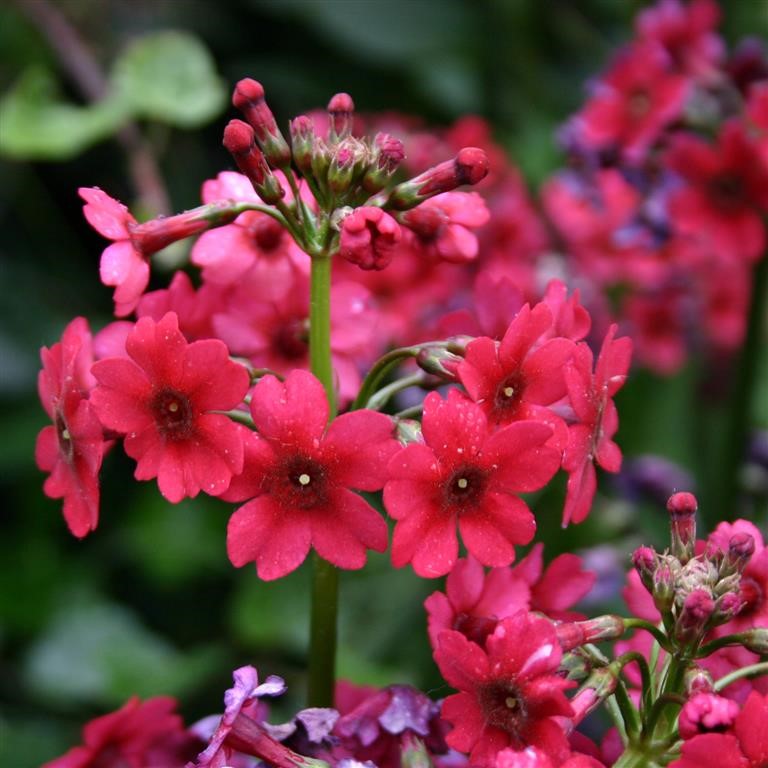
Primula japonica ‘Miller’s Crimson’ – How to Grow
Primula japonica ‘Miller’s Crimson’ is a striking candelabra primula loved for its tall tiers of deep crimson blooms and lush, moisture‑loving foliage. Perfect for damp borders, woodland planting and pond edges, it thrives with consistent moisture and partial shade. Here’s how to plant, grow, divide and care for this elegant spring perennial.
What Is Primula japonica ‘Miller’s Crimson’?
Primula japonica, known as the candelabra primula, is a hardy perennial native to Japan. ‘Miller’s Crimson’ is one of the most popular varieties, producing dramatic tiered flowers in vivid crimson-red from late spring to early summer, rising above large rosettes of green leaves.
It’s ideal for:
- Damp borders
- Woodland gardens
- Bog gardens
- Pond margins
- Shady beds and naturalistic planting
Conditions Needed for Success
Light
- Prefers partial shade to full shade
- Avoid harsh midday or full sun, especially in warm climates
- Morning sun + afternoon shade is ideal
Soil
- Prefers rich, moist, well-draining soil
- Ideal mix: peat-free compost + garden soil + leaf mould
- pH: Slightly acidic to neutral (6.0–7.0)
Moisture
- Requires soil that is consistently moist
- Never allow the soil to dry out fully
- Avoid waterlogged, stagnant conditions
This plant thrives in naturally damp areas—replicate that and it will perform beautifully.
Planting Primula ‘Miller’s Crimson’
Best Time to Plant
- Spring or early autumn, when moisture levels are ideal
Spacing
- Space plants 12–18 inches (30–45cm) apart to allow spreading and air circulation
Depth
- Plant at the same level as the nursery pot
- Ensure the crown is not buried
Watering
- Keep soil consistently moist
- Water deeply and regularly in summer
- Avoid letting the plant dry out, particularly in shade where soil can appear damp but be dry below the surface
Fertilisation
- Feed with a balanced, water‑soluble fertiliser every 2–3 weeks during the growing season
- Too much nitrogen can lead to soft growth—balanced feeding works best
Maintenance
Mulching
- Apply organic mulch, such as leaf mould or compost
- Helps retain moisture and improve soil structure
- Keep mulch away from the crown to avoid rot
Deadheading
- Remove spent flowers to: ✔ Encourage additional blooms
✔ Maintain tidiness
✔ Reduce unwanted self-seeding
Dividing
- Divide clumps every 2–3 years
- Best done in spring or autumn
- Helps maintain vigour and creates new plants
Pests & Diseases
Common Issues
- Aphids
- Slugs and snails (especially on young foliage)
- Fungal diseases in poorly ventilated areas
Management Tips
- Hand-pick slugs or use wildlife-friendly slug control
- Use organic insecticides or soapy water for aphids
- Improve airflow and avoid overcrowding to reduce fungal problems
Winter Care
Primula japonica is hardy, but in colder regions:
- Apply a protective layer of mulch to insulate roots
- Ensure soil drains freely to avoid winter rot
- Remove any dead foliage after frost
Garden Uses
‘Miller’s Crimson’ is excellent for:
- Woodland planting schemes
- Shady, moisture-retentive borders
- Pond edge planting
- Bog gardens
- Naturalistic and wildlife-friendly gardens
Pairs beautifully with:
- Ferns
- Hostas
- Astilbes
- Pulmonaria
- Hellebores
- Other candelabra primulas
FAQs
Is Primula japonica ‘Miller’s Crimson’ hardy?
Yes — it is fully hardy in UK gardens when grown in moist soil.
Does this Primula tolerate sun?
Only light or morning sun. Strong midday sun can scorch leaves and dry the soil too quickly.
Can I grow it in pots?
Yes, but containers dry out faster — keep soil moist at all times.
Does it spread?
It forms clumps and self-seeds lightly in the right conditions.
How tall does it grow?
Flower stems reach 45–60cm, with foliage spreading 30cm wide.