
🌸 Introduction
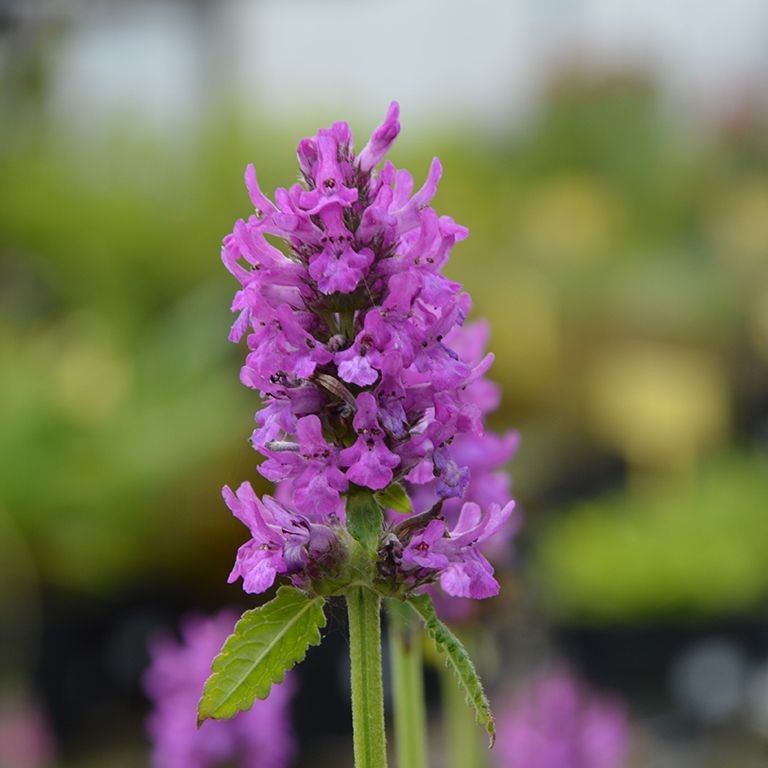
Stachys monieri ‘Hummelo’ is one of the best-performing perennials in modern UK gardens. With its upright spikes of vivid purple-pink flowers and clean, glossy foliage, this plant brings structure, colour and exceptional reliability to borders. Loved by pollinators and widely valued for its toughness, drought tolerance and low-maintenance nature, ‘Hummelo’ is a perennial that earns its place in any planting scheme.
This guide explains exactly how to grow and care for Stachys ‘Hummelo’, from planting and feeding to pests, dividing and winter care — everything needed for thriving, long-lived clumps.

🌞 1. Choose the Right Site
Light
Stachys ‘Hummelo’ thrives in:
- Full sun (best flower production)
- Partial shade (still performs well, but blooms may be lighter)
Aim for 6+ hours of sunlight daily for the strongest colour and tightest habit.
Soil
Ideal conditions:
- Well-drained
- Sandy or loamy soil
- Neutral to slightly alkaline pH
Avoid waterlogged ground — this is the one scenario Stachys won’t tolerate.
🌱 2. Planting Stachys ‘Hummelo’
Planting Time
- Spring or autumn are the best times
- Planting in spring ensures quick establishment before summer
Spacing
Allow 12–18 inches (30–45cm) between plants.
This ensures good airflow and space for clumps to widen.
Planting Depth
Plant at the same soil level as in the pot — avoid burying the crown.
💧 3. Watering
After Planting
- Water deeply to settle soil around roots
Ongoing
- Keep soil moist but not soggy
- Water regularly during dry periods
- Once established, Stachys ‘Hummelo’ becomes notably drought tolerant
🌿 4. Feeding & Soil Enrichment
Stachys is not a heavy feeder.
Best Approach
- Apply a balanced slow-release fertiliser in spring
- Avoid overfeeding — high nitrogen causes floppy growth and fewer flowers
- Adding garden compost annually improves soil performance without excessive nutrients
✂️ 5. Pruning & Maintenance
Deadheading
Snip away spent flower spikes to:
- Encourage more blooms
- Stop unwanted self-seeding
- Maintain a tidy appearance
Cutting Back
- In late autumn, leave some foliage for winter protection
- In early spring, cut back old growth to make way for fresh new leaves
Dividing
Every 2–3 years:
- Lift clumps in early spring or early autumn
- Divide and replant to maintain vigour and prevent congestion
- Bonus: free plants!
🐛 6. Pests & Diseases
‘Hummelo’ is incredibly resilient, but occasional issues can occur:
Pests
- Aphids
- Spider mites (warm, dry spells)
Prevention
- Encourage natural predators
- Avoid overhead watering
- Spray affected plants with soapy water if necessary
Diseases
- Fungal problems occur in poor air circulation
- Ensure spacing and avoid crowding
- Improve drainage to prevent rot
❄️ 7. Winter Care
Stachys ‘Hummelo’ is hardy across the UK, but benefits from small steps:
Winter Tips
- Add a mulch layer in late autumn
- Do not cut back too early — foliage protects the crown
- In exposed northern/windy gardens, add light fleece during extreme cold spells
🌼 8. Why Gardeners Love Stachys ‘Hummelo’
Pollinator Heaven
Bees, hoverflies and butterflies flock to the flower spikes all summer.
Strong, Upright Habit
Stays neat and vertical, even in rain.
Long Blooming
Flowers from June to September.
Great in Design
Works beautifully in:
- Prairie planting
- Cottage borders
- Gravel gardens
- Modern perennial schemes
Companion Plants
Pairs perfectly with:
- Echinacea
- Salvia
- Verbena bonariensis
- Achillea
- Rudbeckia
- Nepeta
❓ FAQs
Is Stachys ‘Hummelo’ drought tolerant?
Yes — once established, it’s one of the more drought-tolerant perennials.
Does it grow in shade?
Light shade is fine, but flowering reduces in deep shade.
Is it invasive?
No — it forms tidy clumps that expand slowly.
Does it self-seed?
Occasionally, but deadheading prevents this.


