
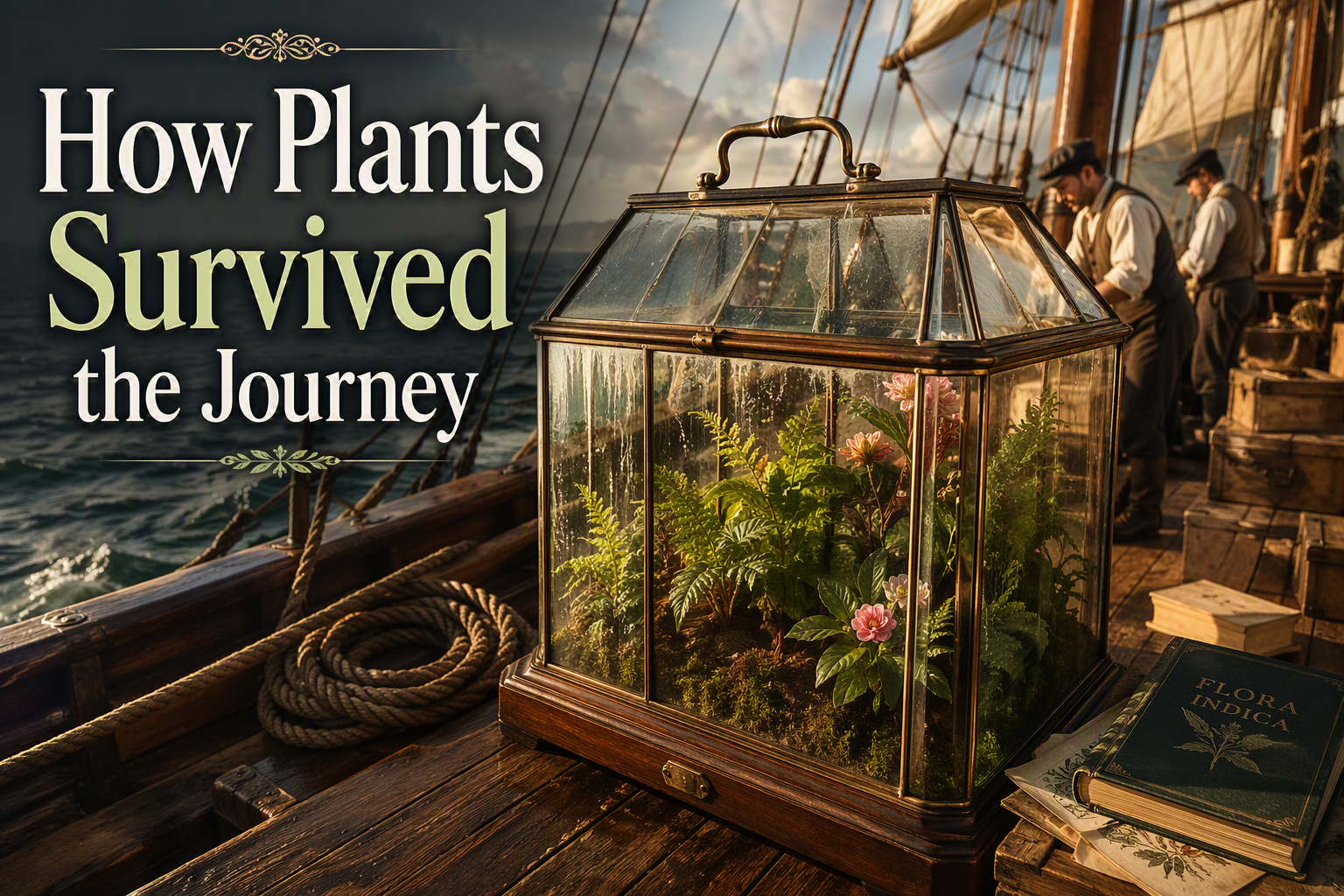
🌿 Wardian Case Explained: How Plants Survived the Journey to Britain
Before modern transport, getting plants across the world was nearly impossible. Most collections never made it home. The invention of the Wardian case changed everything—turning plant hunting from high-risk failure into one of the biggest expansions of global gardening in history.
🌱 Why Plants Kept Dying at Sea
In the 18th and early 19th centuries, plant hunters could find incredible new species—but getting them back to Britain was the real challenge.
Plants sent by ship often:
- Died from saltwater exposure
- Received little to no sunlight below deck
- Dried out or rotted during long journeys
- Were stored like cargo with no care
In many cases, entire collections arrived dead, making plant hunting inefficient and costly.
🌿 The Breakthrough: What Is a Wardian Case?
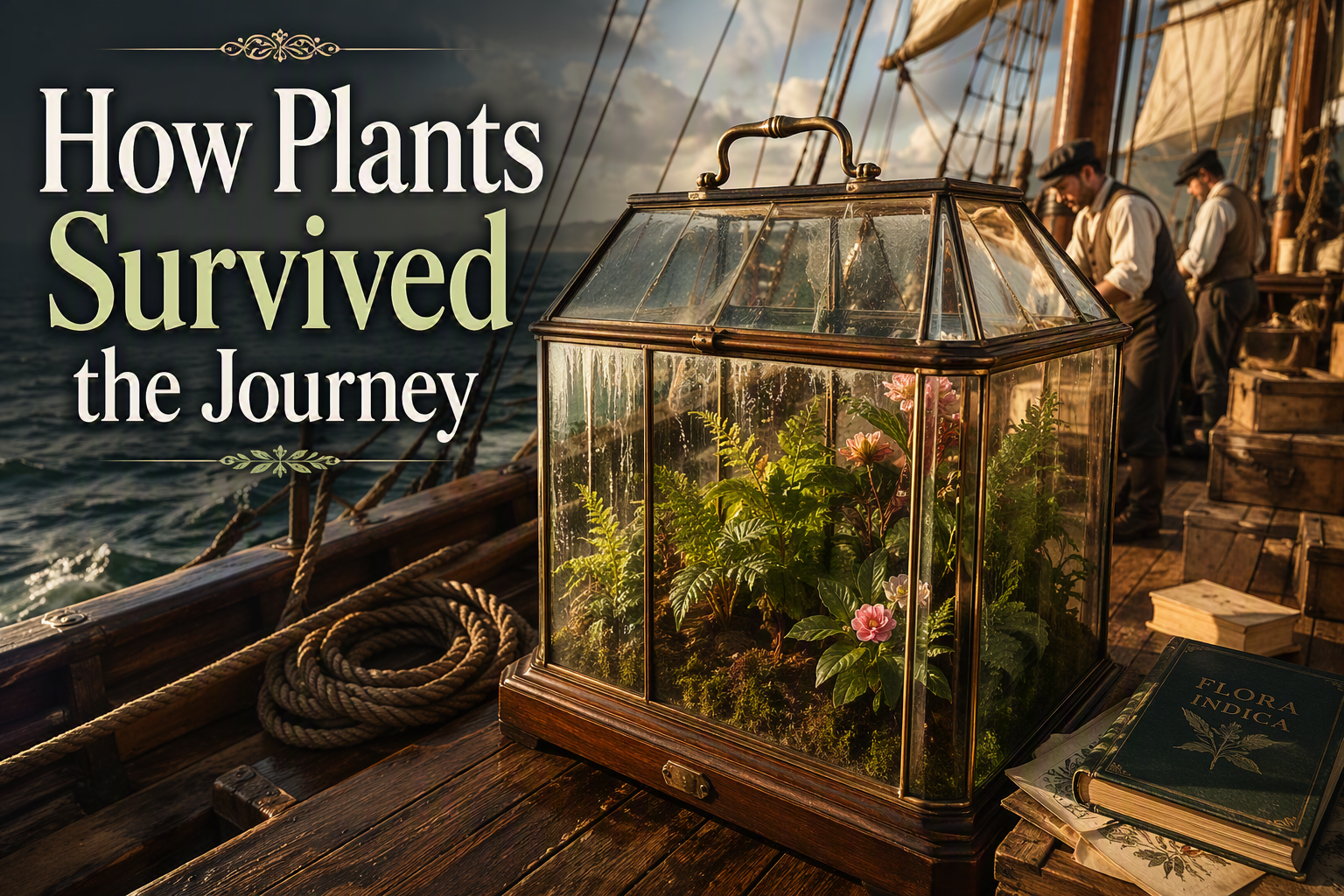
The Wardian case was a simple but revolutionary idea—essentially a sealed glass container used to transport plants safely over long distances.
Inside the case:
- Moisture evaporated and condensed, creating a natural water cycle
- Plants were protected from salt spray and sea air
- Sunlight could still reach the plants on deck
It acted like a miniature self-contained greenhouse.
🌍 How It Was Discovered (Almost by Accident)
The Wardian case was discovered by Dr Nathaniel Bagshaw Ward, who noticed that a fern could survive inside a sealed glass container.
This led to a powerful idea: 👉 If plants could survive in a closed environment, they could survive long journeys at sea.
What started as a small observation quickly became one of the most important innovations in plant history.
🚢 Why the Wardian Case Changed Everything
Before the Wardian case, plant survival rates were incredibly low.
After its introduction:
- Survival rates increased dramatically
- Plant transport became reliable
- Collectors could bring back live specimens consistently
- Global plant exchange accelerated
This meant more species could be introduced to Britain—and actually survive.
⚙️ How Wardian Cases Were Improved
As their importance grew, Wardian cases were refined to handle long sea journeys:
- Wooden frames stabilised the structure
- Cross battens held plants in place during storms
- Ventilation systems allowed airflow while preventing pests
- Stronger construction handled rough crossings
These improvements made them suitable for global transport.
🌸 The Impact on British Gardens
The Wardian case played a major role in shaping the plants we now consider “normal” in British gardens.
It enabled the safe transport of:
- Camellias
- Rhododendrons
- Tea plants
- Tropical and exotic ornamentals
Without it, many of these plants would never have established in the UK.
🌿 A Turning Point in Global Gardening
The Wardian case didn’t just help gardeners—it transformed global plant movement.
It allowed:
- Botanical gardens to expand rapidly
- Nurseries to grow and trade new varieties
- Plant hunters to work more effectively
- Knowledge exchange between continents
In many ways, it laid the groundwork for modern horticulture.
🌱 Bringing That Legacy Into Your Garden
The plants you grow today are part of that story.
Many favourites found in UK gardens—particularly flowering shrubs and ornamentals—were only made possible by innovations like the Wardian case.
👉 Explore plants inspired by the great plant hunting era and build a garden rooted in history.
🌿 Explore Plants Inspired by the Great Plant Hunting Era
Many of the plants that reached Britain during the great age of plant exploration remain favourites in gardens today. If the story of the Wardian case has inspired you, why not explore our collections of Camellias, Rhododendrons, Hostas and Hardy Ferns.
The Wardian case helped collectors transport plants safely across the world, paving the way for many of the ornamental plants we enjoy today. Whether you're creating a woodland-style border with Hardy Ferns and Hostas, or adding late-season colour with Japanese Anemones, you're continuing a gardening tradition that stretches back nearly two centuries.
❓ FAQs
What is a Wardian case?
A Wardian case is a sealed glass container used in the 19th century to transport plants safely over long distances.
Why was the Wardian case important?
It allowed plants to survive long sea journeys, making global plant transport reliable.
Who invented the Wardian case?
Dr Nathaniel Bagshaw Ward discovered the concept after observing plants survive in a sealed glass container.
What plants were transported using Wardian cases?
Many species, including camellias, rhododendrons, and tea plants, were successfully transported this way.
Are Wardian cases still used today?
Modern plant transport uses advanced methods, but the principles of humidity control and protection remain similar.