
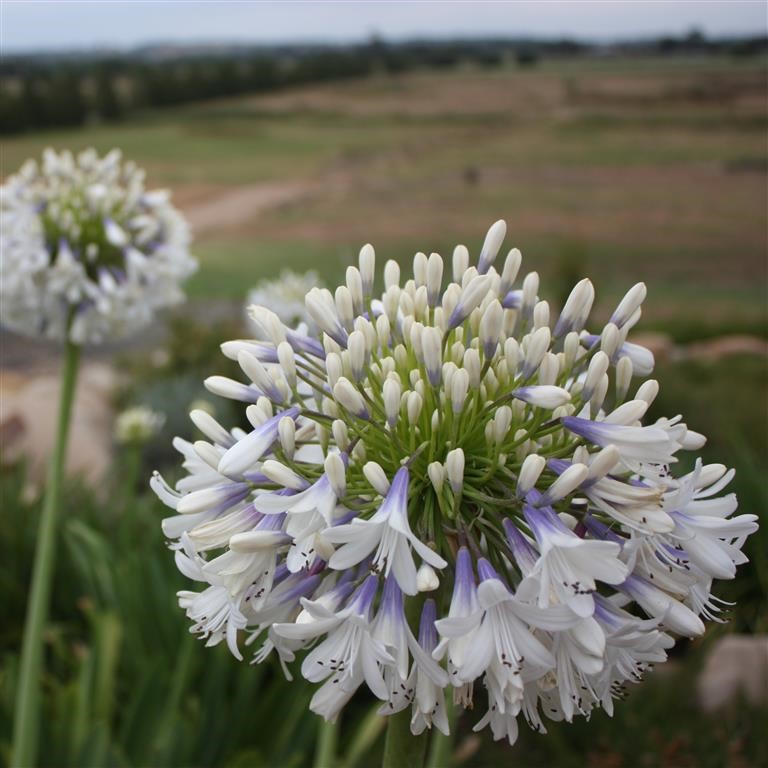
How to Grow Agapanthus orientalis ‘Queen Mum’: Complete Guide for UK Gardens
Agapanthus orientalis ‘Queen Mum’ is a spectacular perennial with striking blue-and-white bicolour blooms and strong architectural foliage. This guide covers the best methods for planting, watering, fertilising, winter care and propagation so you can enjoy impressive summer flower displays year after year.

1. Choosing the Perfect Planting Location
Sunlight
‘Queen Mum’ performs best with full sun to partial shade, ideally 6–8 hours of sunlight per day.
More sun = stronger blooms.
Soil
Use well-draining, sandy or loamy soil enriched with organic matter.
Avoid heavy, wet soils that hold water around the roots.
Improve dense soils with:
- Compost
- Grit
- Leaf mould
2. Watering Agapanthus
During Establishment
Water consistently to help roots anchor.
After Establishment
Agapanthus becomes drought-tolerant, but:
- Water deeply during dry spells
- Allow soil to partially dry between watering
- Avoid waterlogging (root rot risk)
Good drainage is essential for healthy growth.
3. Feeding & Fertilisation
Spring Feeding
Feed with a balanced fertiliser as new shoots emerge.
A low‑phosphorus fertiliser helps maintain strong foliage and support flowering.
Optional Summer Feed
If growth slows or flowering appears weak, apply a light mid‑summer top-up.
4. Pruning & Tidying
After Flowering
- Cut back spent flower stalks
- Remove any damaged, yellowing or dried leaves
Late Autumn
In colder regions, trim lightly to tidy the plant before winter.
5. Winter Care
Agapanthus ‘Queen Mum’ is semi-hardy. Winter care depends on your location.
In Cold Regions
- Apply mulch around the crown
- Protect with fleece or frost cloth during deep cold snaps
- If in containers, move pots to a sheltered spot or bright frost-free area
In Mild Regions
Mulch lightly and ensure soil drainage remains good through wet winter months.
6. Pests & Diseases
Agapanthus is generally resistant but may occasionally face:
Pests
- Aphids
- Snails and slugs (particularly attacking fresh shoots)
Diseases
- Root rot (from poor drainage)
- Fungal issues if airflow is poor
Solutions:
- Improve airflow
- Water at the base
- Avoid overwatering
- Use organic controls where needed
7. Propagation
Division
The simplest and most reliable method:
- Divide clumps in spring or autumn
- Ensure each division has roots and several shoots
- Replant immediately and water in well
Why Divide?
- Refreshes older plants
- Encourages better blooming
- Allows you to multiply your stock
8. Growing in Containers
‘Queen Mum’ thrives in pots.
Container Tips
- Choose a large pot with drainage holes
- Use a gritty, free-draining compost mix
- Water more frequently in summer
- Protect pots during winter (roots are more exposed to cold)
Container-grown Agapanthus often flowers even better when slightly rootbound.
Conclusion
Agapanthus orientalis ‘Queen Mum’ is a bold, elegant perennial that rewards gardeners with stunning summer blooms and a strong, architectural presence. With the right sunlight, good drainage, balanced feeding and simple seasonal maintenance, this standout Agapanthus will thrive in borders or containers for many years.
FAQs
Q: Why isn’t my Agapanthus flowering?
A: Common causes include too much shade, overwatering, poor drainage, or a pot that is too large.
Q: Can I grow ‘Queen Mum’ in a pot?
A: Yes — it grows exceptionally well in containers with free-draining compost.
Q: Should I cut back the foliage in winter?
A: No — remove only damaged leaves. Keep healthy foliage to protect the plant.
Q: Is Agapanthus hardy?
A: Semi-hardy. Mature plants survive mild UK winters, but young or potted plants need protection.


