
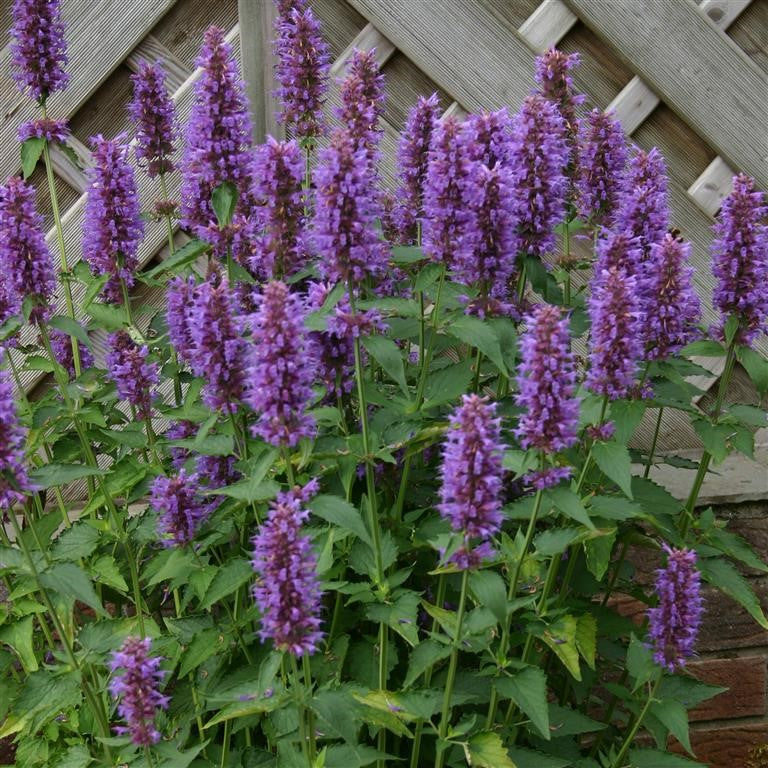
Agastache: A Colourful Favourite for UK Gardens
Agastache is a vibrant, aromatic perennial that brings long-lasting colour, fragrance and pollinator appeal to UK gardens. Hardy, easy to grow and ideal for sunny borders, this plant is a top pick for gardeners wanting reliable summer impact.
What Makes Agastache Special?
Agastache — also known as hyssop or hummingbird mint — is loved for:
- Tall, vibrant flower spikes
- Long flowering season (June–September)
- Aromatic leaves that release scent when brushed
- Fantastic pollinator appeal
- Drought tolerance once established
It’s a standout perennial for modern, wildlife‑friendly planting schemes.
Does Agastache Come Back Each Year?
Yes. Agastache is a herbaceous perennial, meaning it dies back over winter and reliably regrows in spring. A layer of mulch helps protect roots in colder regions.
Is Agastache Hardy in the UK?
Most varieties are hardy in UK gardens — especially selections like ‘Blue Fortune’ and ‘Blue Boa’.
However:
- In northern or exposed areas, a winter mulch helps
- Ensure excellent drainage to prevent root rot
Your sales history also includes Agastache varieties such as Agastache blue boa, confirming its popularity. [Agastache blue boa | Image]
Where Is the Best Place to Plant Agastache?
Agastache thrives in:
- Full sun — ideally 6+ hours daily
- Well‑drained soil — sandy or loamy is ideal
- Sheltered spots — protect from strong winds for best height and flowering
Avoid heavy, waterlogged clay.
Does Agastache Spread?
Agastache forms clumps and spreads slowly. It’s not invasive.
Divide plants every 2–3 years to maintain shape and encourage vigorous growth.
Should You Cut Back Agastache in Autumn?
Yes — but strategically:
- After flowering: deadhead to prolong bloom
- Late autumn: cut stems to 10–15cm after foliage dies back
- Winter: mulch crowns for frost protection
Perfect Companion Plants for Agastache
Agastache pairs beautifully with:
- Echinacea – bold contrast and similar conditions
- Salvia – nectar-rich, complementary shapes
- Lavender – drought-tolerant, aromatic match
- Rudbeckia – golden flowers enhance Agastache’s purples
Extra Tips for Growing Agastache
- Water during prolonged dry spells, but avoid soggy soil
- Feed once in spring with a balanced fertiliser
- Cut back spent flowers to extend blooming
- Plant in groups of 3–5 for maximum colour impact
FAQs
Does Agastache come back each year?
Yes — it regrows each spring as a herbaceous perennial.
Is Agastache hardy in the UK?
Generally hardy, especially in well‑drained soil. Mulch in colder climates.
Where should I plant it?
Choose full sun with well‑drained soil and a sheltered spot.
Does it spread?
It forms clumps and spreads gently — not invasive.
Do I cut it back?
Yes, cut back to 10–15cm in late autumn after flowering.
What pairs well?
Echinacea, Salvia, Lavender and Rudbeckia are ideal partners.
Bring colour, fragrance and pollinator power to your borders with Agastache — a long-flowering, low-maintenance favourite that thrives in UK gardens.


