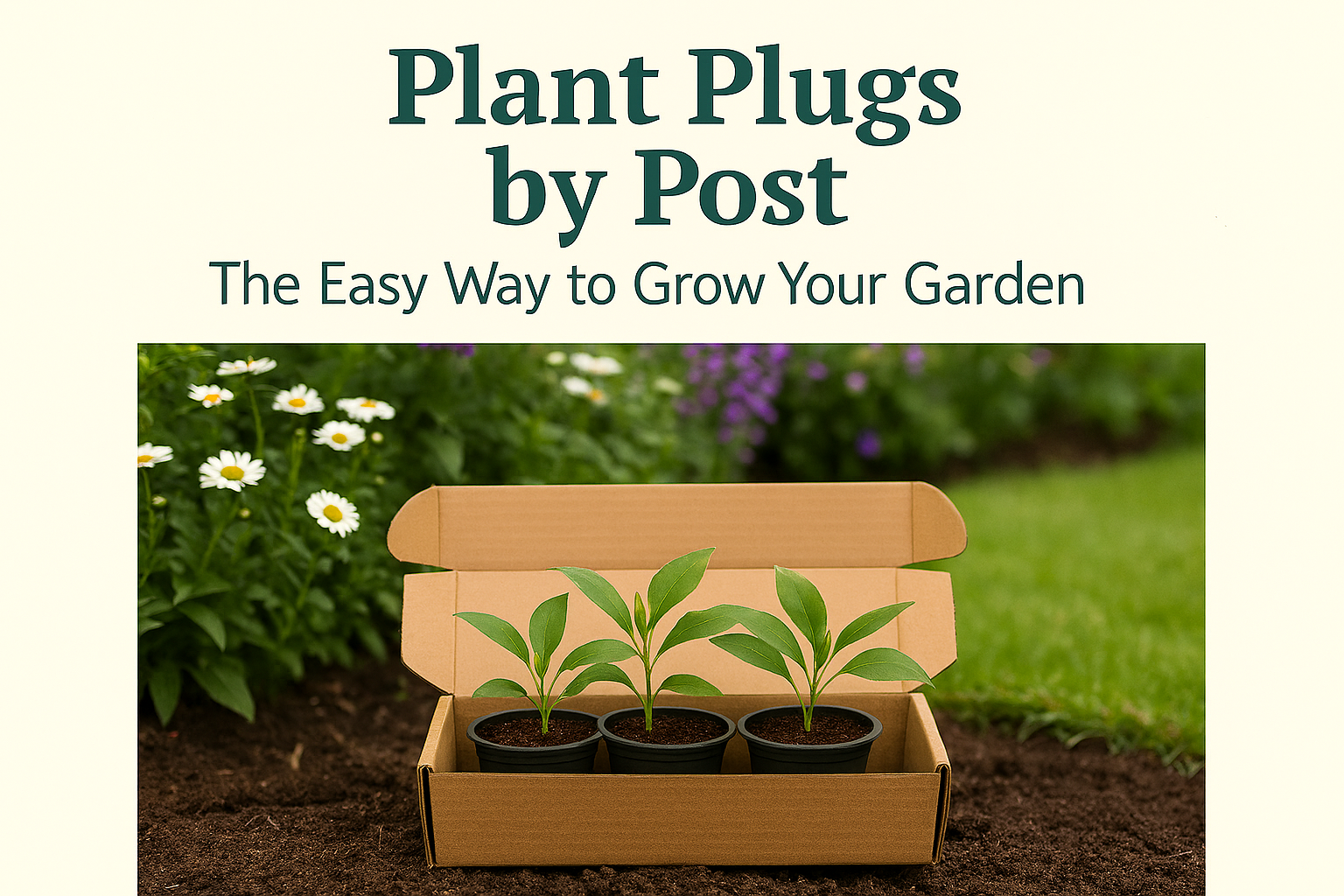
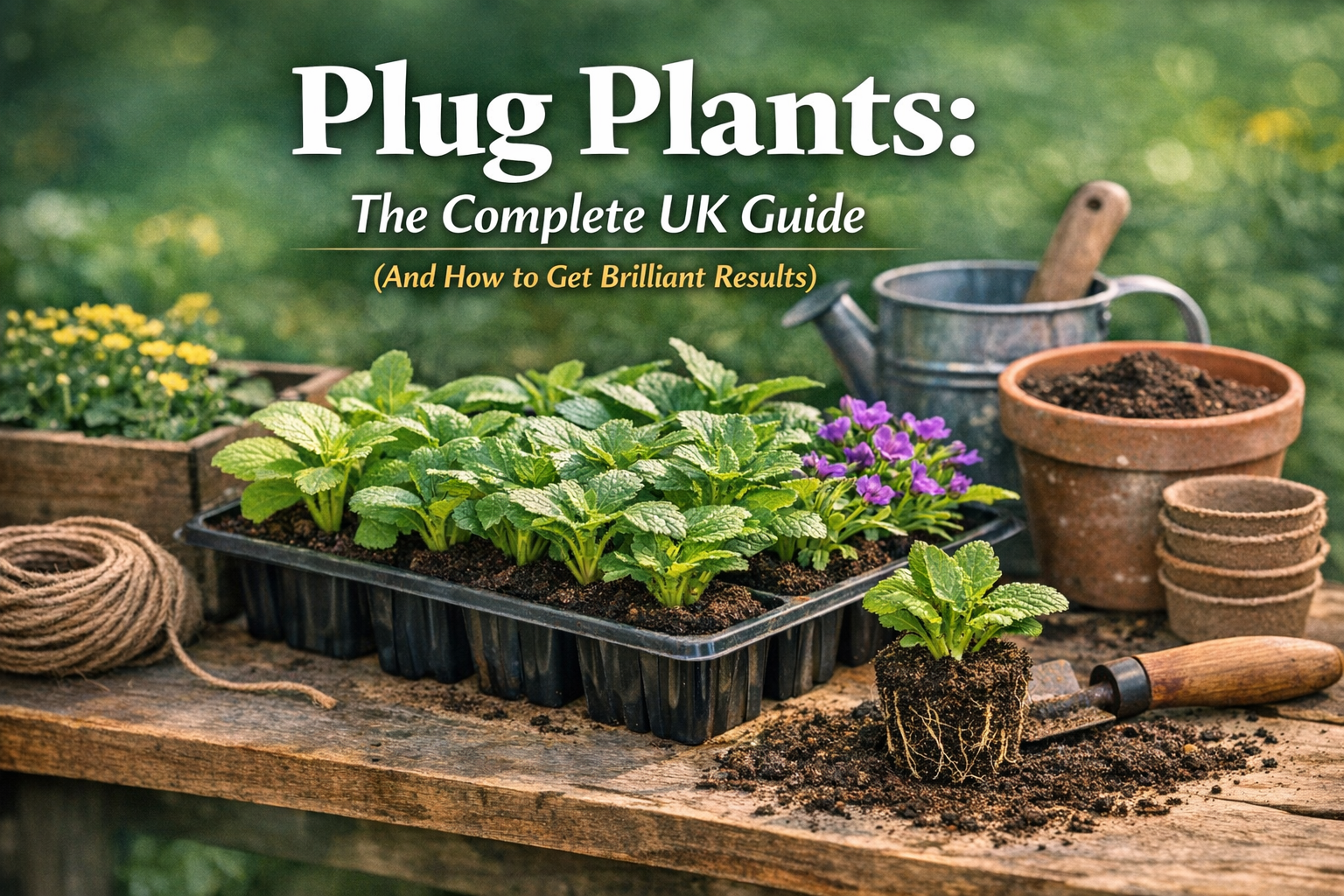
Plug Plants: The Complete UK Guide (And How to Get Brilliant Results)
Plug plants are one of the fastest, easiest and most reliable ways to grow strong, healthy garden displays — especially if you want quicker results than seeds. In this guide you’ll learn what plug plants are, when to plant them in the UK, how to pot on for success, and the simple steps that help plugs establish quickly and grow away.
What are plug plants?
Plug plants are young starter plants grown in individual cells (modules). They arrive as small but established plants with a developing root system, ready to pot on into a larger container or (in the right weather) plant outside.
For many gardeners, plugs are the sweet spot: they’re cheaper than mature plants, but far less risky than sowing seed — and you get consistent results across multi‑packs.
Why plug plants are a smart choice (especially in the UK)
1) Faster, more reliable growth
Because the plant has already started life strongly, it establishes quicker once potted on — ideal when you want a full look without waiting a whole season.
2) Great value in multi‑packs
If you’re planting borders, hanging baskets, pots or a new bed, repetition is what makes a display look “designed”. Plug multi‑packs let you do that affordably.
3) Perfect for beginners
No germination worries, fewer early-stage failures, and a simple process you can repeat confidently.
4) Easy to grow on in small spaces
Even a windowsill, porch, conservatory or small greenhouse can grow plugs on successfully.
When to plant plug plants in the UK
Timing depends on plant type and temperatures. As a general rule, plant outside once frost risk has passed — otherwise pot on and grow in a bright, sheltered spot until conditions improve.
Helpful guides:
How to grow plug plants successfully (step-by-step)
Step 1: Unpack and check moisture
Open your plugs as soon as they arrive. If compost feels dry, water gently to rehydrate.
Step 2: Pot on (recommended for best results)
Use peat‑free compost in 7–9cm pots (or similar). Plant each plug at the same depth as it was in the module (don’t bury the stem).
Step 3: Grow on in bright, sheltered conditions
A bright windowsill, greenhouse, cold frame or porch is ideal. Keep compost evenly moist — not soaked.
Step 4: Harden off (the success-maker)
Before planting outside, acclimatise plugs for 5–7 days: outside for a few hours at first, then increase time daily.
Step 5: Plant out and water in well
Plant at the same depth, firm gently, then water thoroughly.
Step 6: Feed lightly once growth starts
After 2–3 weeks (or once you see new growth), a balanced liquid feed supports strong foliage and blooms.
What plug plants should you choose?
Pick based on what you want your garden to do:
For long-term borders
Perennials and repeat performers give structure and return year after year.
For pots and baskets
Seasonal colour plants create quick impact — ideal for patios and entrances.
For tricky shade
Woodland and shade lovers are perfect for north-facing areas and under trees.
For bold, exotic vibes
Tropical-style plugs are brilliant for summer impact and statement planters.
Shop plug plants (best place to start)
If you want to browse everything in one place, head here first:
Or explore popular types:
FAQs about plug plants
Are plug plants better than seeds?
Plug plants give you a head start and reduce early-stage risk, so they’re usually faster and more reliable than seeds.
Can I plant plug plants straight outside?
Yes — once frost risk has passed. If nights are cold, pot on and grow on briefly first.
Do plug plants need feeding?
After they start growing strongly, a light balanced feed helps produce better plants.
How long until plug plants flower?
Many seasonal varieties flower within a few months, but timing depends on the plant and temperatures.


.png)