
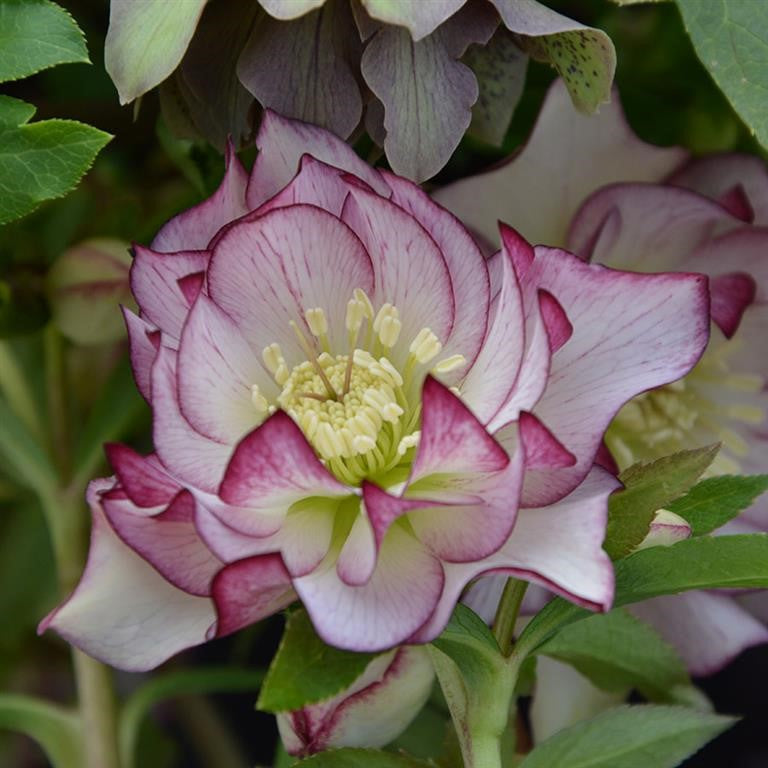
Helleborus ‘Double White Picotee’ – How to Grow
Helleborus ‘Double White Picotee’ is a stunning winter‑into‑spring perennial, prized for its elegant double white flowers edged in soft pink. Hardy, long‑lived and perfect for shade, it’s an ideal plant for woodland gardens, winter borders and containers. This guide shows you how to plant, grow, prune and care for this exceptional hellebore.

About Helleborus ‘Double White Picotee’
This beautiful hellebore variety produces double, layered blooms with crisp white petals delicately edged in pink or raspberry tones. Flowering from late winter to early spring, it brings colour when little else is blooming.
Perfect for:
- Shady or woodland borders
- Underplanting beneath deciduous shrubs
- Winter garden focal points
- Containers near doorways and paths
Choosing the Right Location
Light
- Prefers partial shade to full shade
- Avoid harsh direct sun, especially in warm climates
- Morning sun with afternoon shade is ideal
Soil
- Requires well‑drained, rich, moisture‑retentive soil
- Improve texture with compost, leaf mould or well‑rotted organic matter
- Avoid waterlogged areas
Hellebores dislike sitting in wet soil but enjoy consistent moisture.
Planting Helleborus ‘Double White Picotee’
Best Time to Plant
- Spring or autumn, when temperatures are mild
Spacing
- Space plants 18–24 inches (45–60cm) apart
- Allows for airflow and mature clump development
Planting Depth
- Dig a hole twice the width of the rootball
- Plant at the same depth as the pot
- Do not bury the crown
Watering
Initial Watering
- Water well after planting to settle the roots and soil
Ongoing Care
- Keep the soil moist but not soggy
- Once established, hellebores tolerate light drought
- Water more regularly in long dry spells
Mulching
A spring mulch helps:
- Retain moisture
- Suppress weeds
- Keep soil temperatures even
- Feed the soil with organic matter
Apply around—but not directly onto—the crown.
Fertilising
- Feed with a balanced, slow‑release fertiliser in early spring
- Avoid heavy feeding
- Too much nitrogen = lush foliage but fewer blooms
Pruning & Deadheading
After Blooming
- Remove faded flowers to tidy the plant
- Prevents unwanted self‑seeding
Foliage Care
- Cut back old, tattered or diseased leaves in late winter before new flowers emerge
- Helps reduce fungal spread and improves display
Pests & Diseases
Common Pests
- Slugs
- Snails
- Aphids
Use organic controls or hand‑picking where needed.
Diseases
- Hellebores are generally disease‑resistant
- Watch for fungal problems in damp, crowded conditions
- Good airflow helps prevent issues
Winter Care
Hellebores are fully hardy, but in very cold areas:
- Add a thin layer of mulch to protect roots
- Avoid heavy, wet mulch against the crown
- Plants recover well from frost once spring arrives
Why Grow ‘Double White Picotee’?
- Flowers during the bleakest months
- Elegant double blooms
- Reliable, hardy and low maintenance
- Deer and rabbit resistant
- Ideal for shady, difficult garden spots
FAQs
Is Helleborus ‘Double White Picotee’ hardy?
Yes — it is fully hardy in UK gardens.
Does it grow in full shade?
Yes, but partial shade provides the best flowering.
Can I grow it in containers?
Absolutely — use a deep pot with rich, well‑drained compost.
How big does it get?
Typically 35–45cm tall with a similar spread.
When should I prune hellebores?
Remove old leaves in late winter and deadhead after blooming.


