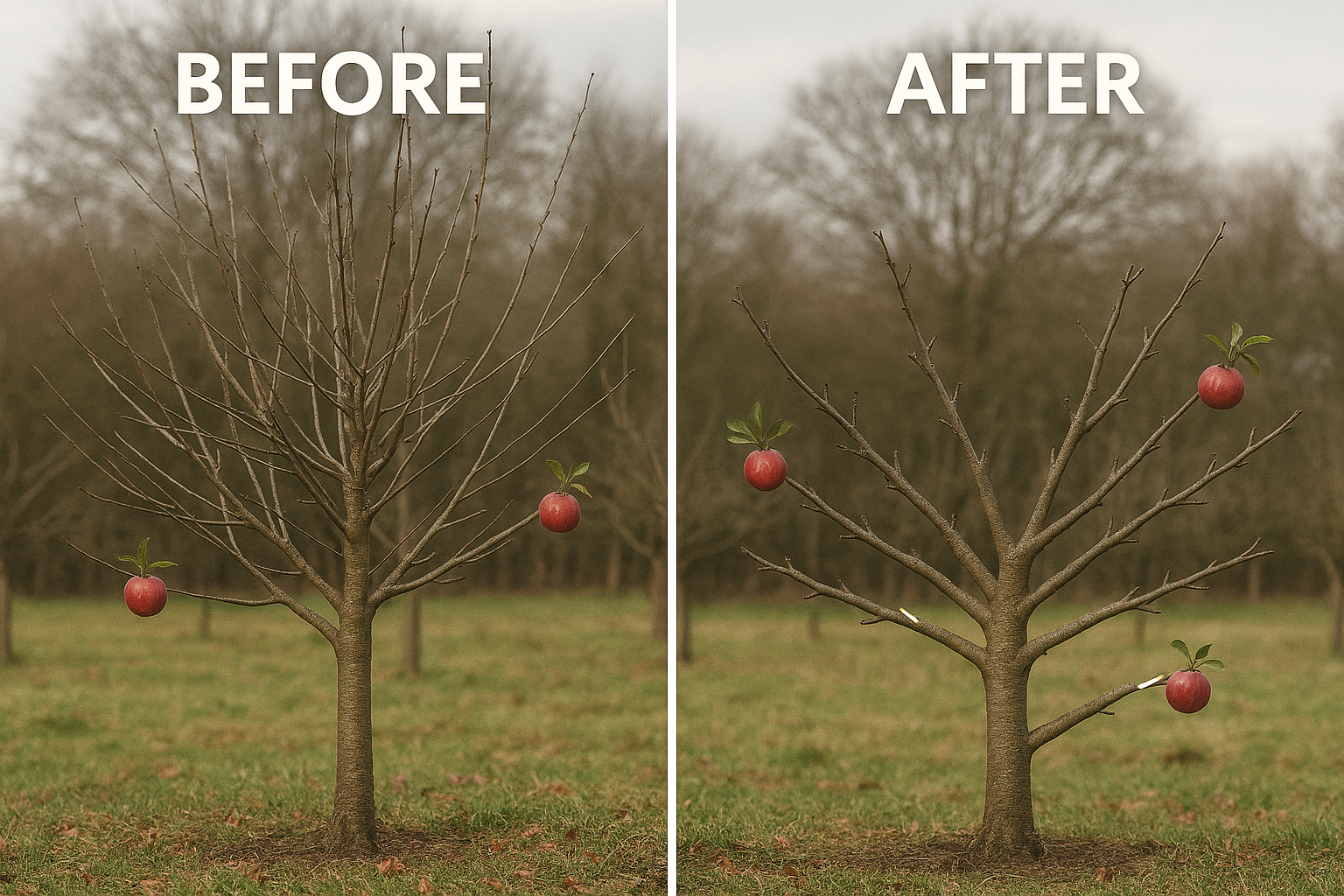
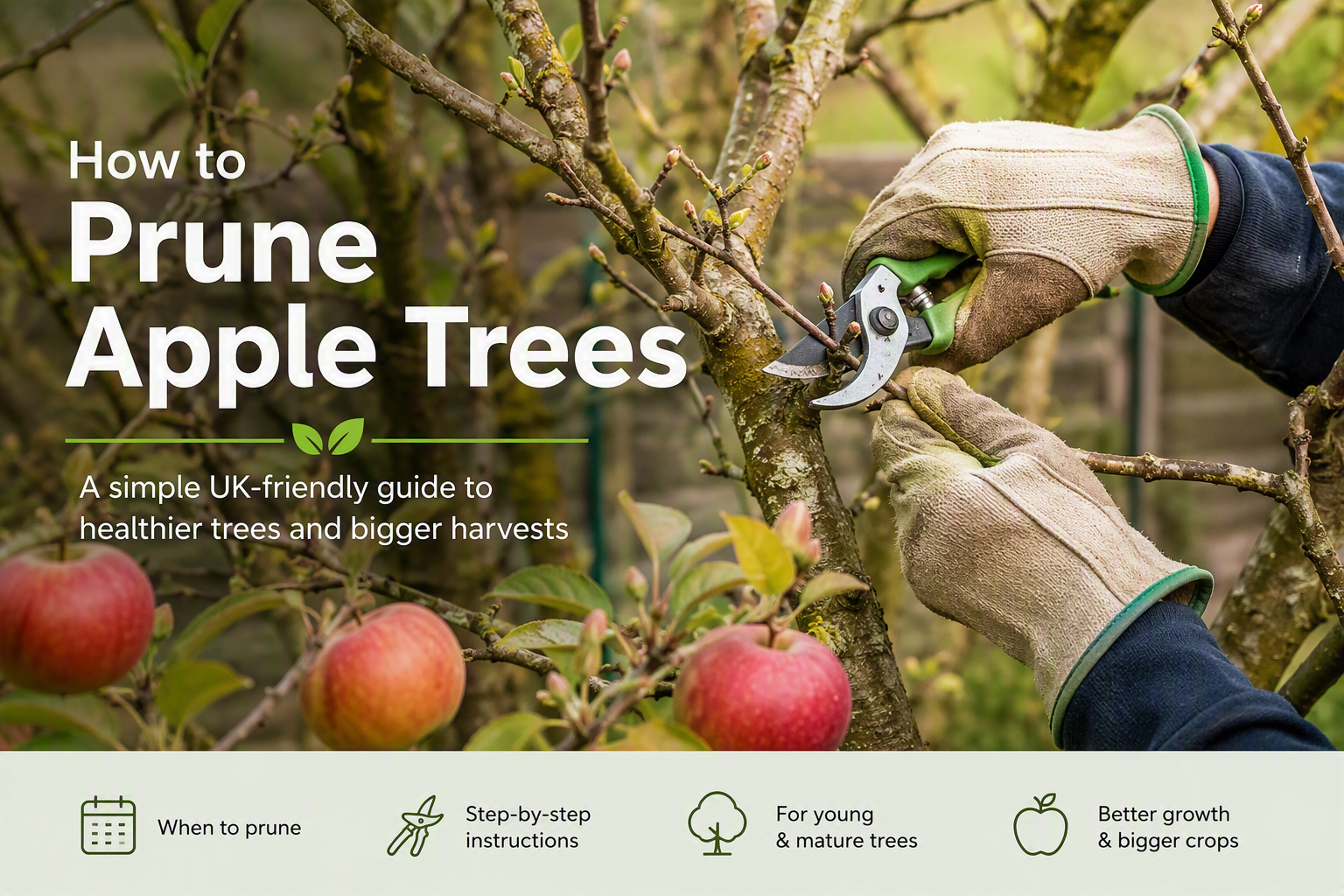
Pruning apple trees is essential for maintaining a healthy, productive tree. Done correctly, pruning improves airflow, allows more sunlight to reach developing fruit, reduces the risk of disease, and encourages stronger branches that can support heavier crops.
Whether you're growing a newly planted apple tree, maintaining an established specimen, or trying to restore an overgrown tree, understanding when and how to prune will improve both fruit quality and long-term tree health.
When Should You Prune Apple Trees?
Winter Pruning (January to February)
For most apple trees in the UK, winter pruning is the main pruning season.
Benefits include:
- Encourages strong new growth in spring
- Makes the tree structure easier to see
- Improves shape and productivity
- Promotes healthy fruiting wood
Avoid pruning during periods of hard frost, as freshly cut branches can be damaged.
Summer Pruning (Late July to August)
Summer pruning is mainly used to control growth and maintain shape.
It helps:
- Remove vigorous water shoots
- Improve airflow through the canopy
- Direct energy into fruit production
- Reduce excessive tree size
Avoid major structural pruning during summer.
Tools Needed for Pruning Apple Trees
Before starting, ensure your equipment is clean and sharp:
- Secateurs for small branches
- Loppers for medium-sized branches
- Pruning saw for larger limbs
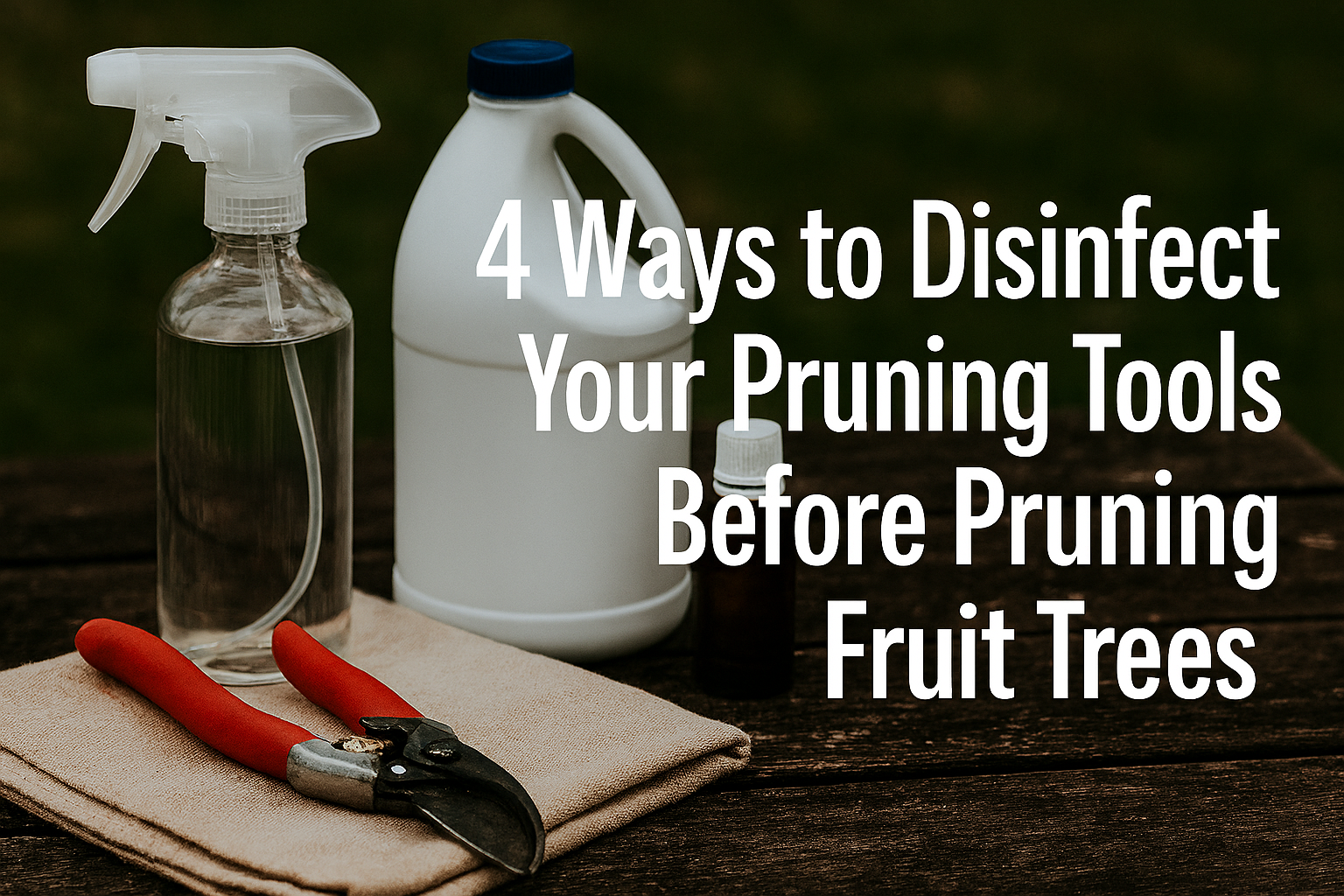
- Disinfectant for cleaning tools between cuts
Clean tools help prevent the spread of diseases such as apple canker.
Understanding How Apple Trees Produce Fruit
Most apple varieties produce fruit on short shoots known as fruiting spurs, which develop on branches that are at least two years old.
When pruning, the aim is to encourage:
- Healthy fruiting spurs
- Good light penetration
- Strong framework branches
- An open, balanced canopy
How to Prune an Apple Tree: Step-by-Step
1. Remove Dead, Diseased and Damaged Wood
Start by removing:
- Dead branches
- Diseased wood
- Broken limbs
- Crossing branches
- Rubbing growth
Always cut back to healthy wood just outside the branch collar.
2. Remove Suckers and Water Shoots
Suckers grow from the rootstock or base of the trunk and should be removed entirely.
Water shoots are fast-growing vertical stems that often appear after heavy pruning.
Remove most water shoots while retaining a few well-positioned shoots if they can be trained into productive branches.
3. Improve Airflow and Light Levels
A well-pruned apple tree should allow sunlight to reach the centre of the canopy.
Remove branches that:
- Grow towards the centre
- Cross over one another
- Point downward
- Grow excessively upright
Good airflow helps reduce fungal diseases and improves fruit ripening.
4. Shorten Long Branches
Reduce overly vigorous side branches by approximately one-third.
Always cut just above an outward-facing bud to encourage growth away from the centre of the tree.
Horizontal branches tend to produce more fruit than strongly upright growth.
5. Preserve Fruiting Spurs
Fruiting spurs are responsible for most apple production.
Try not to remove large quantities of established spur-bearing wood. Instead, thin out congested areas while retaining productive branches.
Pruning Young Apple Trees
First Year
A newly planted whip should be cut back to about 75cm above ground level.
This encourages strong framework branches to develop.
Second Year
Select three to five well-spaced branches to form the main structure.
Remove competing shoots and shorten selected branches by approximately one-third.
Third Year
Continue developing the tree's desired shape, whether that is an open-centre or central-leader form.
How to Prune Mature Apple Trees
Established trees require maintenance pruning rather than heavy shaping.
Focus on:
- Removing congestion
- Improving airflow
- Renewing older fruiting wood
- Reducing excessive height gradually.
Avoid removing more than 25-30% of the canopy during a single year, as this can trigger excessive regrowth.
Common Apple Tree Pruning Mistakes
Avoid these frequent errors:
❌ Over-pruning established trees
❌ Leaving long branch stubs
❌ Cutting into the branch collar
❌ Pruning during autumn
❌ Removing too much fruiting wood
❌ Ignoring crowded growth and poor airflow
Frequently Asked Questions
Do apple trees need pruning every year?
Yes. Regular annual pruning helps maintain tree health, structure, and fruit production.
Does pruning improve fruit quality?
Yes. Better light levels and airflow usually result in larger, healthier apples with improved colour and flavour.
When should apple trees not be pruned?
Avoid pruning during autumn and during periods of severe frost.
Can an overgrown apple tree be restored?
Yes. Renovation pruning can successfully restore neglected trees, but it should be carried out over several years rather than all at once.
Do all apple trees fruit on spurs?
No. Most varieties are spur-bearing, but some varieties are tip-bearing or partial tip-bearing and require lighter pruning to avoid reducing fruit production.
Final Thoughts
Learning how to prune apple trees correctly is one of the best ways to improve fruit quality, reduce disease problems and keep trees productive for many years. By pruning during winter, maintaining an open canopy and preserving fruiting spurs, you can enjoy healthier trees and bigger harvests season after season.