
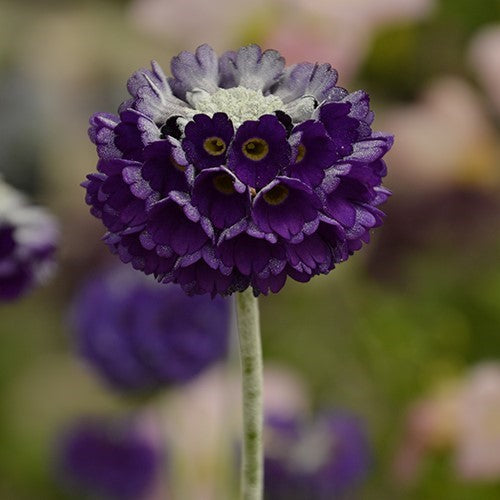
Primula capitata mooreana – How to Grow This Striking Himalayan Primrose
Primula capitata mooreana, also known as the Himalayan cowslip, is a unique and beautifully architectural primrose prized for its dense, globe‑shaped flower heads and cool‑loving nature. This guide explains everything you need to grow it successfully in damp, shaded areas of your garden.

What Makes Primula capitata mooreana Special?
This distinctive primula produces dramatic spherical clusters of violet‑blue to purple‑toned flowers that rise above rosettes of silver‑powdered foliage. It brings texture, height, and a touch of Himalayan charm to damp, shady borders.
Climate & Best Location
Hardiness
- Prefers USDA zones 5–8, making it suitable for most UK gardens.
Light Requirements
- Thrives in partial to full shade.
- Avoid direct sun, especially in hot or dry locations.
Ideal Settings
- Woodland gardens
- Shady borders
- Bog gardens
- Beside streams or ponds (without waterlogging)
Soil Requirements
Soil Type
- Rich, humus‑heavy, well-draining soil
- Moist but never stagnant
pH Range
- Slightly acidic to neutral (6.0–7.0)
Soil Improvement
Add any of the following:
- Compost
- Leaf mould
- Fine bark
This helps with structure, nutrients, and moisture retention.
How to Plant Primula capitata mooreana
When to Plant
- Spring or autumn
- Cooler weather helps the root system establish
Spacing
- Plant 12–18 inches apart for airflow and healthy clump growth
Planting Depth
- Plant at the same depth as it was growing in its pot or nursery container
Watering
- Keep soil consistently moist—Primula capitata dislikes drying out
- Water at the base to avoid fungal problems
- Increase watering during hot or windy periods
Fertilising
- Apply a balanced, slow-release fertiliser in early spring
- Feed every 4–6 weeks during active growth for stronger blooming
- Avoid overfeeding, which can cause lush foliage but weaker flower displays
Maintenance & Pruning
Deadheading
- Remove spent flowers to encourage additional blooming and maintain appearance
Foliage Care
- Cut back yellowing or dying leaves in late autumn
- Encourages clean regrowth the following spring
Pests & Diseases
Pests
- Aphids
- Slugs and snails (especially damaging to young growth)
Preventative Measures
- Encourage airflow between plants
- Water at the base, not the foliage
- Use organic slug controls or barriers
Propagation
Division
- Divide clumps every 2–3 years
- Best done in spring or autumn
How to Divide
- Lift the clump gently
- Separate into smaller rooted sections
- Replant immediately
- Water thoroughly
This helps rejuvenate plants and increase your stock.
Companion Plants
Primula capitata mooreana pairs beautifully with:
- Hostas
- Ferns
- Astilbe
- Pulmonaria
- Other moisture‑loving primulas
Avoid drought‑loving plants.
Enjoying the Blooms
Primula capitata mooreana produces striking, bell-shaped flowers in dense globes from late spring into early summer. Their unusual form adds structure and a focal point in shade gardens.
Conclusion
With the right conditions—moist, rich soil, dappled shade, and steady watering—Primula capitata mooreana becomes a standout feature in any shaded garden. It rewards you with unique, eye‑catching blooms and dependable perennial growth year after year.
FAQs – Primula capitata mooreana
1. Does Primula capitata mooreana prefer shade?
Yes, it thrives in partial to full shade and struggles in direct sun.
2. How often should I water it?
Keep the soil consistently moist, especially during warm weather.
3. Is it suitable for bog gardens?
Yes — as long as the soil is moist but not waterlogged.
4. How tall does it grow?
Typically 20–40 cm, with tall flowering stems rising above rosettes of foliage.
5. Can it be grown in pots?
Yes. Use a moisture‑retentive, rich compost and water frequently.
6. When should I divide Primula capitata mooreana?
Every 2–3 years in spring or autumn to maintain vigour.
7. What pests does it attract?
Slugs, snails, and aphids — use organic measures to protect young plants.
8. Is it fully hardy?
Yes, but mulch in winter to protect roots in colder areas.


