
.
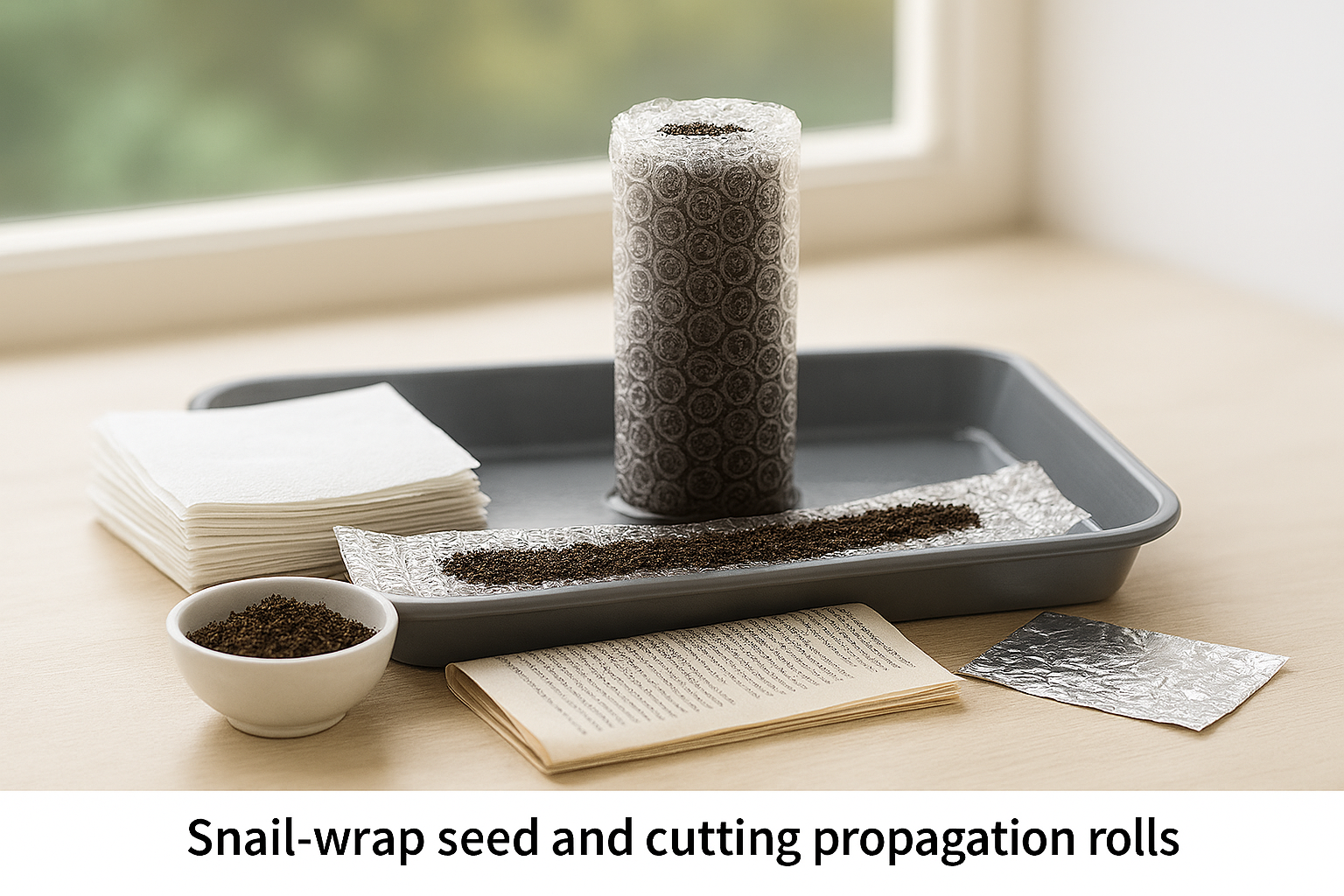
🌱 How to Make Snail‑Wrap Seed & Cutting Rolls: The Ultimate Low‑Cost Propagation Method for UK Gardeners
Snail‑wrap propagation rolls are one of the easiest, cheapest and most space‑efficient ways to grow seeds and cuttings indoors. Using simple materials like bubble wrap, paper towels or kitchen roll, you can create a warm, moisture‑steady micro‑environment that boosts germination and rooting rates — perfect for UK windowsills, greenhouses and polytunnels.
🌱 What Is a Snail‑Wrap Seed or Cutting Roll?
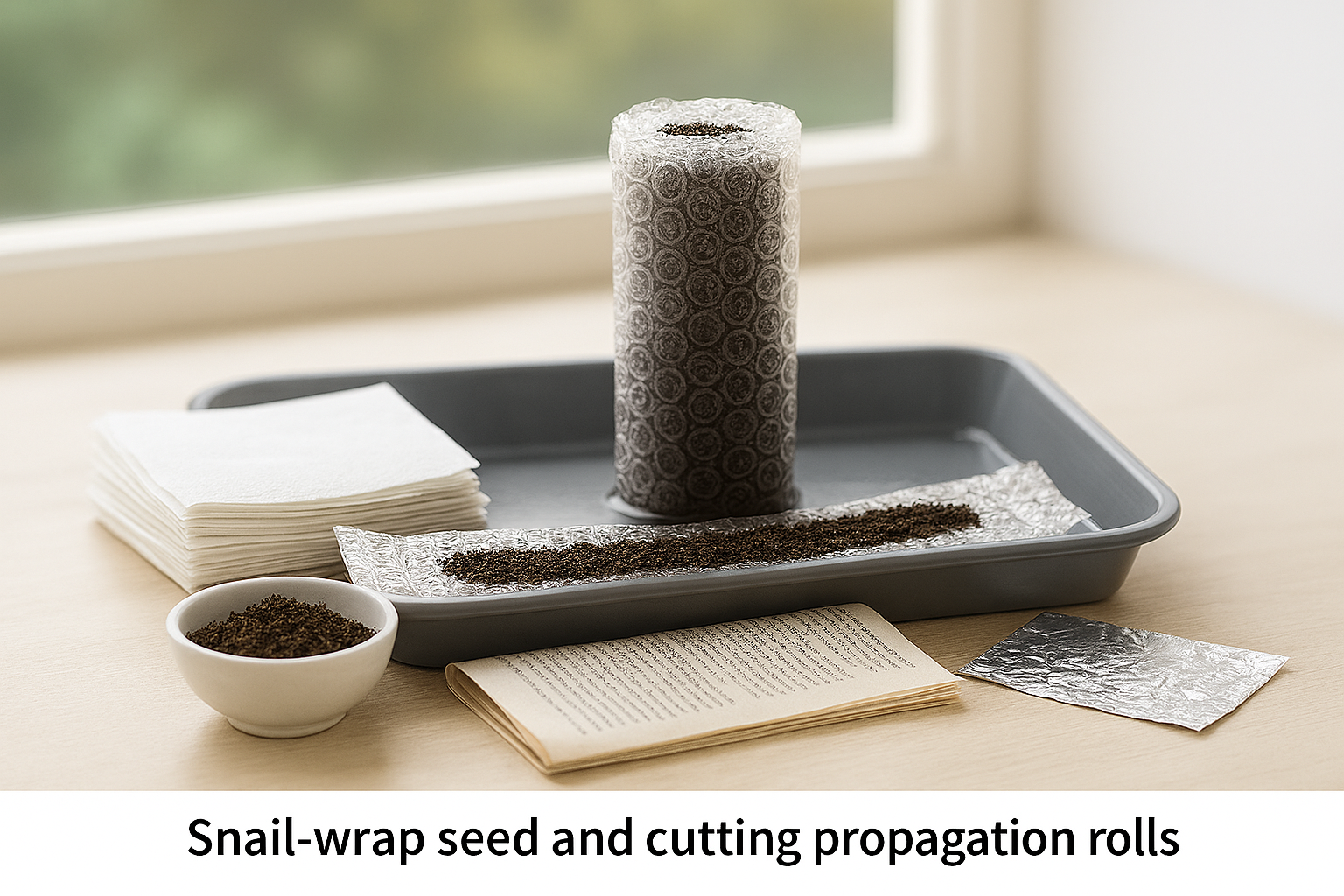
A snail‑wrap roll is a flexible strip — typically bubble wrap or paper — laid out flat, filled with seed compost or moistened paper, then rolled up to create a compact, upright propagation cylinder. This technique:
- Holds warmth
- Maintains consistent moisture
- Saves huge amounts of space
- Is perfect for seeds and softwood/succulent cuttings
- Fits even the smallest indoor growing setups (windowsills, under lights, airing cupboards)
This method is used across your bubble‑wrap sowing reels and early‑sowing tutorials.
🧰 Materials You Can Use to Make Snail‑Wrap Rolls
Below is the full list of materials — choose based on what you’re sowing or rooting.
1. Bubble Wrap (Classic Method)
Seen in your chilli, cucumber and tomato reels.
Benefits:
- Excellent insulation
- Creates air pockets that keep warmth stable
- Retains moisture while allowing gentle diffusion
- Great for early sowings (Jan–March)
2. Paper Towels / Kitchen Roll
Used in early windowsill sowing and paper‑base propagation.
Benefits:
- Super cheap
- Easy to moisten
- Roots anchor readily
- Ideal for pre‑sprouting, lettuce, onions, beetroot
3. Newspaper Strips
Benefits:
- Breathable
- Good for cool‑season crops
- Breaks down naturally (plantable as a strip)
Tip: double‑layer to reduce tearing.
4. Compostable Bioplastic Sheets
Benefits:
- Retains moisture more than paper
- Easy to roll tightly
Best for: basil, coriander, annual herbs.
5. Kitchen Foil + Paper Combo (Improvised “heat trap”)
Benefits:
- Foil reflects warmth
- Paper holds moisture
Use sparingly — can over‑heat if placed in full sun.
6. Old Seed Trays + Bubble Wrap Hybrid
Used across several of your updates — bubble wrap over trays helps retain warmth and moisture.
Best for: Greens, spring onions, beetroot, lettuce, winter sowings.
7. Cloth / J‑Cloths
Benefits:
- Reusable
- Absorbent and stable
- Excellent for cuttings (succulents, mint, rosemary)
🪴 How to Make a Snail‑Wrap Seed Roll (Step‑By‑Step)
1. Lay Out Your Base
Use bubble wrap (bubbles facing up) or a sheet of paper towel.
2. Add Seed Compost
Spread a thin, even layer of fine seed compost. Mist lightly.
3. Sow Your Seeds
- Sow in a straight line ~1–2cm from the top
- Works for: chillies, cucumbers, tomatoes, beets, lettuce, spring onions
4. Add Tissue Strip for Capillary Watering
Place tissue or paper under the roll so it dips into a tray of water — the method used in your chilli/cucumber reels.
5. Roll It Up
Roll gently but firmly into a “snail”.
6. Stand Upright in a Tray of Water
The tissue draws water up evenly.
7. Place Somewhere Warm and Bright
Windowsill, greenhouse, propagator — works extremely well for early sowings.
🌿 How to Make a Snail‑Wrap Cutting Propagation Roll
This works beautifully for succulents, money plant (Crassula), rosemary and other easy‑to‑root stems.
1. Base Layer
Use damp paper towel, J‑cloth or bubble wrap lined with tissue.
2. Prepare Cuttings
Remove lower leaves, trim below a node.
3. Lay Cuttings on the Strip
Even spacing so roots don’t tangle.
4. Roll Gently
Not tight — allow airflow.
5. Keep Moist & Bright
Place upright in a jar or tray, add water to base.
6. Wait for Roots to Form
Most soft stems root within 7–21 days.
🌾 What Can You Grow in Snail Rolls? (Seeds & Cuttings)
Seeds
- Chillies 🌶️
- Cucumbers 🥒
- Tomatoes 🍅 (bubble‑wrap method)
- Beetroot
- Lettuce
- Spring onions
- Herbs (basil, coriander, mint)
- Early greens (kale, spinach)
Cuttings
- Money Plant / Crassula [
- Rosemary
- Mint
- Succulents
- Softwood perennials (spring)
🧪 Why Snail‑Wrap Propagation Works (The Science Bit)
- Capillary action provides constant moisture without waterlogging
- Vertical structure increases oxygen airflow
- Micro‑insulation from bubble wrap keeps temperatures stable
- Compact footprint = more seedlings in less space
- Perfect visibility — easy to check moisture and germination
- Low cost — nearly all materials are household items
🪴 Troubleshooting
- Mould forming → Increase ventilation, use thinner compost layer
- Leggy seedlings → More light, cooler room
- Uneven germination → Ensure the tissue reaches water properly
- Roots tangling → Pot‑on as soon as first true leaves appear
- Compost drying quickly → Add humidity dome or plastic cover
❓ FAQs
Do I need a heat mat?
Only for chillies, aubergines and very early sowings.
Can I reuse the bubble wrap?
Yes — rinse, dry, store flat. Replace when cloudy or brittle.
Can you plant the whole roll?
Yes for paper‑based rolls. For bubble wrap, unroll and pot‑on.
Can cuttings rot inside?
Only if too tight or overly wet. Loosen the roll, reduce watering.


.png)


