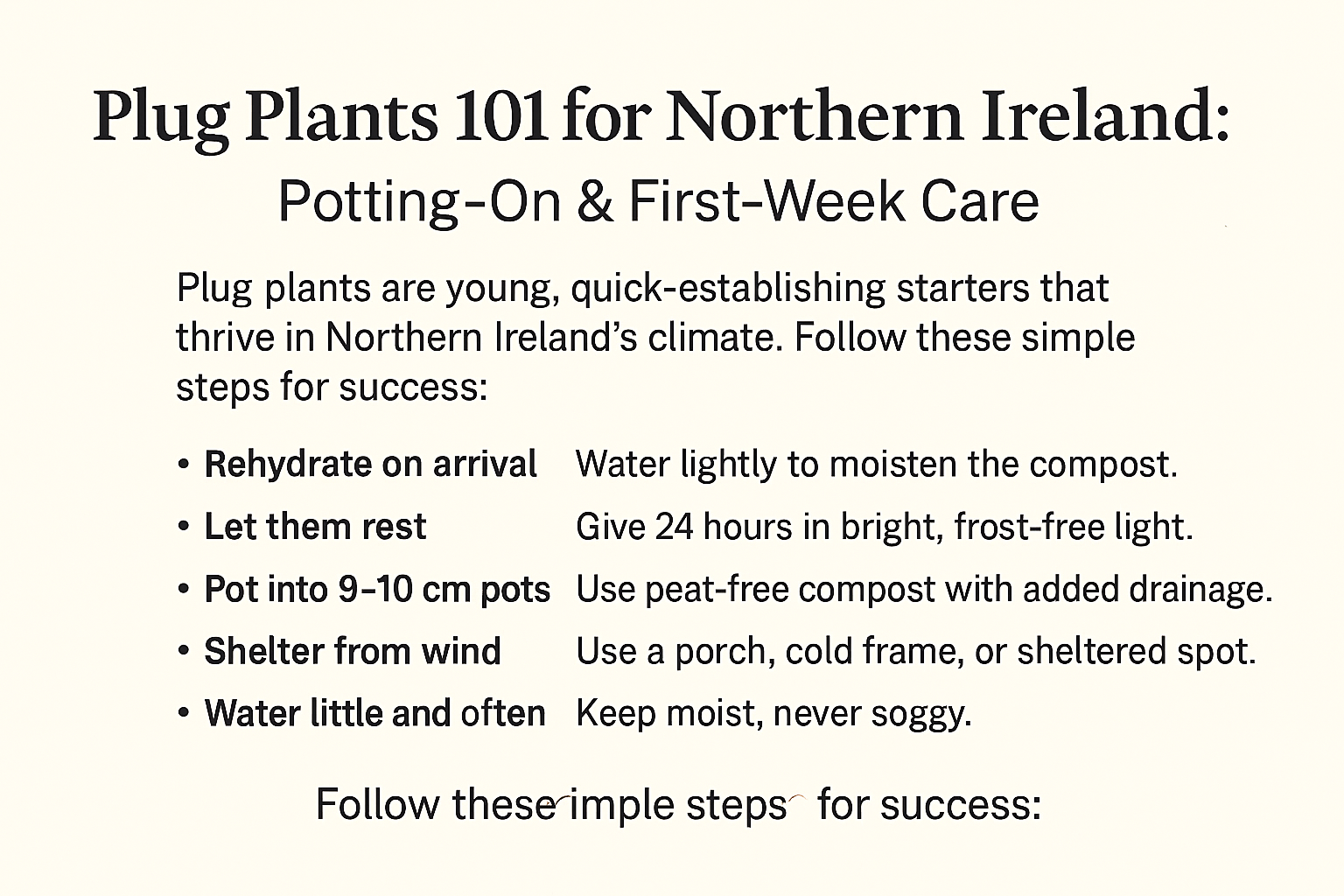

The Ultimate Guide to Plug Plants in 2026: How to Grow Healthier Plants with Less Effort
The Ultimate Guide to Plug Plants in 2026
Plug plants continue to rise in popularity across the UK, offering affordability, convenience, and strong results. Whether you want colourful summer bedding, herbs, perennials, or lush containers, plug plants give your garden a reliable head start.
What Are Plug Plants?
Plug plants are professionally raised young plants grown in small cells. They’re compact, easy to handle, and come with healthy root systems that establish quickly once planted. Their reliability makes them a fantastic choice for gardeners of all experience levels.
Why Choose Plug Plants?
Plug plants offer benefits that seeds and larger plants often can’t match:
- Cost‑effective
- Simple to handle
- Rapid establishment
- High success rate
Choosing the Right Plug Plants for Your Garden
Bedding Plants for Colour
Ideal for containers and borders — think osteospermum, verbena, and similar summer favourites.
Hardy Perennials
Heuchera, bergenia, hosta, euphorbia and more give long‑lasting structure.
Herbs & Edibles
Mint, lavender, rosemary, plus leafy greens for kitchen gardens.
Shade‑Lovers
Ferns, vinca, primulas, and tricyrtis thrive in cooler, darker spots.
Step‑by‑Step Guide to Planting Plug Plants
- Prepare the soil by loosening the top layer and adding compost.
- Water the plugs before planting to reduce shock.
- Space correctly according to plant type.
- Firm the soil gently around the roots.
- Water thoroughly after planting.
- Mulch and begin feeding after a few weeks.
Seasonal Plug Plant Care
This seasonal structure comes from your January–March editorial plan.
Spring
Plant hardy plugs early, protect from late frosts, and begin feeding lightly.
Summer
Water deeply, deadhead bedding plants, and maximise sunlight.
Autumn
Reduce watering, mulch borders, and protect tender plants.
Winter
Hardy varieties can stay out; tender ones need fleece or shelter.
Common Mistakes and How to Avoid Them
- Overwatering
- Planting too deeply
- Insufficient light
- Using the wrong compost
Best Soil Mixes for Plug Plants
- General mix: peat‑free compost + perlite
- Herbs: gritty, well‑drained compost
- Perennials: compost enriched with organic matter
- Bedding: lighter, airier mixes for fast growth
Problems & Solutions
- Yellowing leaves → Improve drainage
- Slow growth → Feed regularly
- Leggy plants → Provide more light
-
The Complete Guide to Plug Plants: Why They’re the Smart Gardener’s Choice
-
The Ultimate Guide to Plug Plants in 2026: How to Grow Healthier Plants with Less Effort
-
Why March Is the Perfect Time to Buy Plug Plants — A Complete Guide for UK Gardeners
-
Plug Plants (Plant Plugs) – The Complete Guide for UK Gardeners
-
Exotic Plug Plants: Create a Tropical Look in UK Gardens (2026 Guide)
FAQs
Aligned with your schema‑ready FAQ requirement.
Do plug plants need special soil?
Most thrive in peat‑free compost; herbs prefer gritty soil.
How often should I water them?
Water when the surface dries slightly—avoid saturation.
Can plug plants grow indoors?
Herbs and leafy greens can; most bedding plants prefer outdoors.
Can plug plants survive winter?
Hardy varieties can; tender ones require protection.
Call to Action
Ready to grow a stronger, more vibrant garden? Explore Dartana’s full range of plug plants — fast delivery, high success rates, and varieties for every season.


.png)