
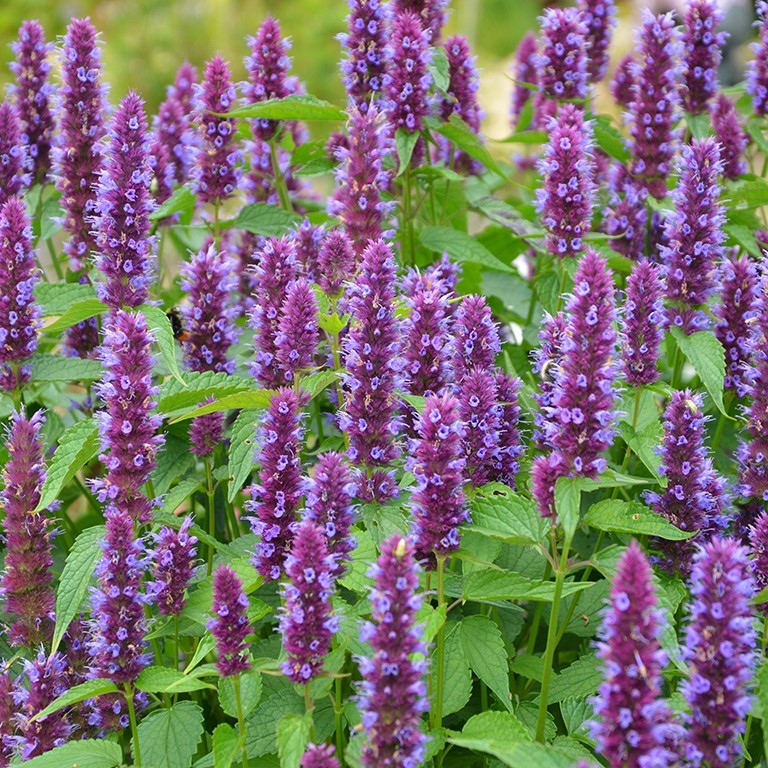
Agastache ‘Beelicious Pink’ and ‘Beelicious Purple’ are compact, bee‑magnet perennials known for producing masses of scented flowers from midsummer into autumn. They grow well in the UK, but because they prefer warm, dry conditions, they need sun, drainage and smart winter care to truly thrive.
These varieties from the Beelicious series are especially valuable for pollinator gardens, containers, and dry borders — provided you set them up correctly.

🌞 1. Are Agastache ‘Beelicious’ Hardy in the UK?
Agastache sits around USDA Hardiness Zone 6–7, which overlaps much of the UK — but there’s a catch.
The UK’s cold and wet winters are the biggest risk, not the temperature itself.Region‑by‑Region Outlook
- South England & coastal regions: Usually overwinter with mulch
- Midlands & North: Needs a sheltered, free‑draining spot
- Scotland / exposed sites: Best grown in containers or treated as tender perennials
Winter Survival Boosters
- Gravel or grit mulch to shed winter rain
- Avoid clay or soggy soil
- Overwinter pots in a cold frame or unheated greenhouse
🌱 2. Best Soil & Site Conditions
Agastache will fail quickly in poor drainage, so soil preparation is key.
Ideal Location
- Full sun — minimum 6 hours daily
- Sheltered from cold winds
- Light, sandy or loamy soil
Improving Drainage
Perfect if your garden tends towards clay:
- Add horticultural grit
- Dig in coarse sand
- Mix in leaf mould
- Raise beds or grow in containers
Container Mix
60% multi‑purpose compost
30% grit
10% perlite
🌸 3. When to Plant Agastache in the UK
Best time:
✔ Spring (March–May) — gives time to establish before winter.
Autumn planting:
Possible, but only in mild areas (southern/coastal).
Avoid in colder regions — roots may not establish quickly enough.Spacing:
30–45cm apart to ensure airflow and reduce mildew risk.
💧 4. Watering & Feeding
Watering
- Keep evenly moist for the first 4–6 weeks after planting
- Once established → water only during prolonged dry spells
- Avoid overwatering — a common UK mistake
Feeding
- Light feed in spring
- Avoid high‑nitrogen fertilisers (creates floppy, frost‑tender growth)
✂️ 5. Pruning, Deadheading & Seasonal Maintenance
Deadheading
Encourages repeat blooms and extends the flowering season.
Pruning
- Leave stems standing over winter — protects the crown
- Cut back in spring, once new shoots are visible
Do NOT prune in autumn
This reduces the plant’s natural winter resilience.
❄️ 6. Winter Care (The Most Important Section for UK Gardeners)
Agastache hates winter wet more than winter cold.
Winter Protection Checklist
- Apply a grit or gravel mulch around the crown
- Avoid soggy or compacted soil
- Cover with fleece during prolonged frost
- Move pots to shelter during winter storms
Colder regions:
Treat as a borderline hardy perennial — grow in pots, or lift and overwinter under cover.
🐛 7. Pests & Diseases
Agastache is generally trouble‑free.
Watch for:
- Aphids on new growth
- Powdery mildew in humid or overcrowded plantings
Prevention
- Ensure airflow
- Water at soil level, not overhead
- Space plants appropriately
🌿 8. Propagation
Cuttings (Recommended)
Take softwood or semi‑ripe cuttings in summer for reliable cloning.
Seeds
Easy to grow but cultivars like Beelicious won’t grow true.
Division
Possible but not always ideal unless the plant has bulked out significantly.
🌼 9. Companion Planting
Agastache combines beautifully with other sun‑loving, drought‑tolerant plants:
- Lavender
- Echinacea
- Sedum
- Nepeta
- Salvia
- Verbena bonariensis
Perfect for bee‑friendly borders and wildlife gardens.
🚫 10. Common Mistakes to Avoid
- Planting in shade
- Planting in heavy or waterlogged soil
- Cutting back in autumn
- Overfeeding
- Overwatering
- Poor winter drainage
Avoid these and Agastache becomes one of the easiest long‑flowering perennials you can grow.
❓ FAQs
Is Agastache hardy in the UK?
Mostly yes, but drainage matters more than temperature. In damp regions, winter losses can occur without protection.
Can I grow Agastache in pots?
Absolutely — and in clay‑heavy gardens, pots are often the best option.
Does Agastache come back every year?
Yes, if given sun and good drainage. In colder regions, treat as tender or protect well.
Is Agastache good for bees?
Extremely. The Beelicious series is bred specifically for pollinator appeal.


