
Low Maintenance Gardening: The Best Drought‑Tolerant Plants for Modern UK Gardens
Gardens have changed. Less watering, less feeding, less constant upkeep—that’s the direction everything is heading. The smart move now is simple: plant things that can handle dry spells and still look good doing it.
Drought‑tolerant plants aren’t just for hot climates anymore—they’re quickly becoming essential for UK gardens coping with warmer summers and unpredictable weather.
Why drought‑tolerant planting matters now
Modern UK gardens are shifting towards climate‑smart planting—plants that survive on less water, tolerate extremes, and reduce maintenance.
This means choosing plants that:
- Establish quickly
- Cope with dry soil
- Need minimal feeding
- Return year after year
If a plant needs constant watering, it’s becoming a liability—not an asset.
The backbone of a low maintenance garden
The trick isn’t one plant—it’s combining types that naturally thrive together in dry conditions.
1. Succulents & groundcover (your “no effort” layer)
These are your real workhorses.
A standout option:
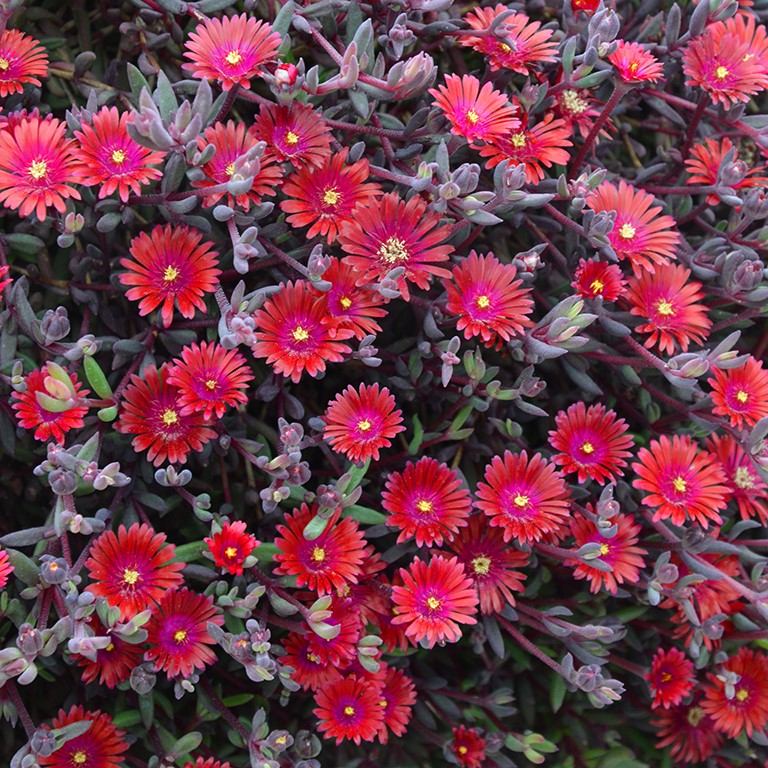
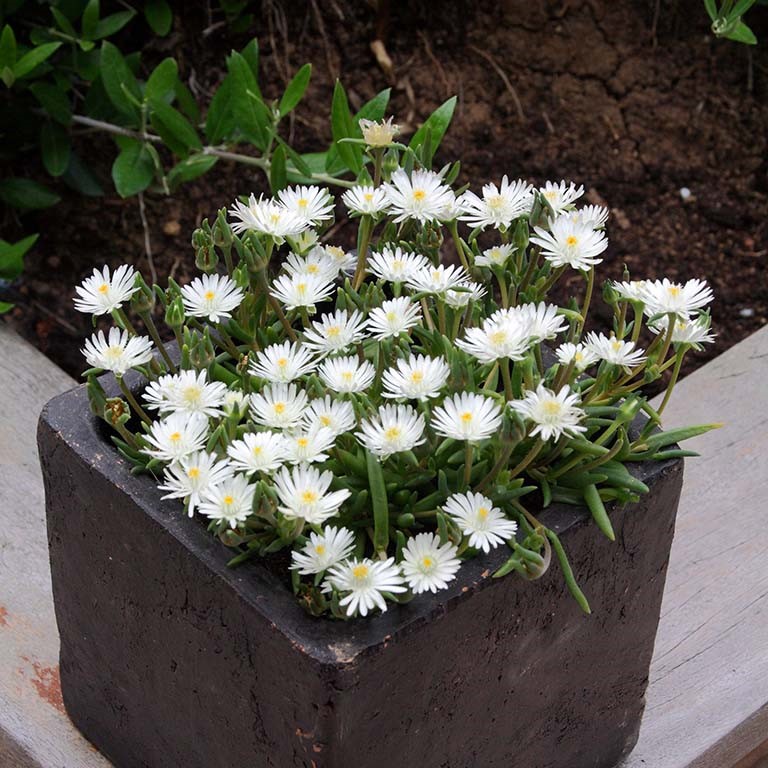
Delosperma (ice plants) are built for harsh conditions—poor soil, full sun, and minimal water. Once established, they need almost no input and produce long‑lasting colour.
They’re ideal for:
- Gravel gardens
- Edging paths
- Rockeries and slopes
2. Mediterranean‑style perennials
These are the backbone of drought‑tolerant borders.
Typical choices include:
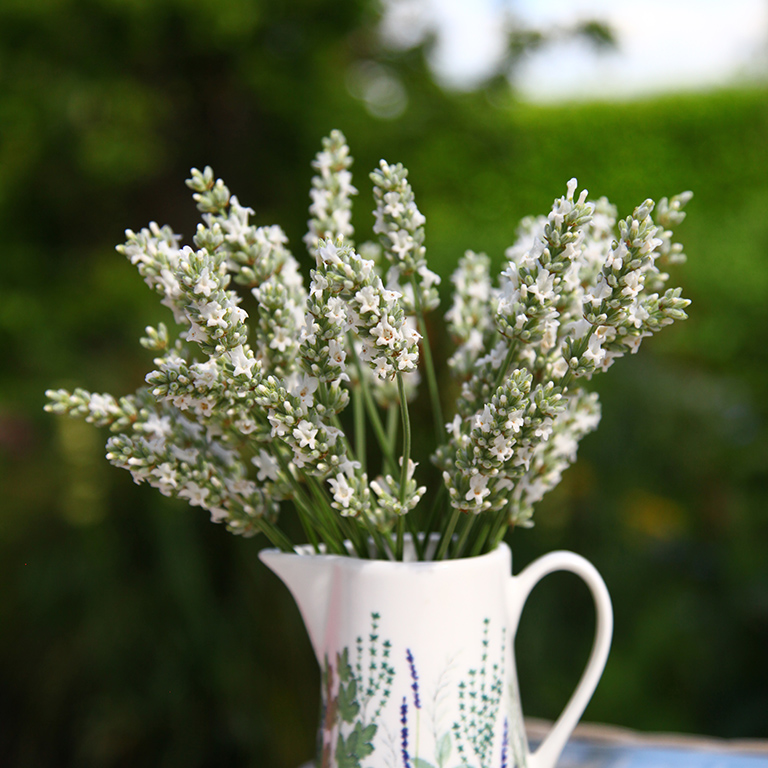
- Lavender
- Salvia
- Sedum
- Verbena
These types of plants:
- Tolerate dry soil once established
- Flower reliably
- Work well in sunny, open planting schemes
For the bigger trend behind this shift:
Climate Smart Plants for UK Gardens
3. Hardy shrubs for structure
You need something that holds the garden together all year.
A strong example:
Brachyglottis handles:
- Wind
- Dry soil
- Poor ground
Once settled, it requires very little attention and provides year‑round structure and foliage interest.
Where drought‑tolerant plants work best
You’ll get the best results if you place them correctly:
- Full sun borders
- Gravel or free‑draining beds
- Raised beds and slopes
- Containers that dry out quickly
Dry conditions aren’t a problem—they’re an advantage if you choose the right plants.
How to build a low‑maintenance drought garden
Keep it simple and practical:
✅ Improve drainage first
Drought‑tolerant plants hate sitting wet more than they hate dryness. Add grit or plant slightly raised if needed.
✅ Plant in groups
Blocks of the same plant establish faster and suppress weeds.
✅ Water once… then step back
Most drought‑tolerant plants need water while establishing—but very little once settled.
✅ Mulch lightly
Use gravel rather than heavy organic mulch in dry gardens.
The biggest mistake people make
Trying to mix thirsty plants with drought‑tolerant ones.
You end up:
- Overwatering the dry‑tolerant plants
- Underwatering the thirsty ones
Pick a direction and commit—low input planting works best when everything is suited to it.
Easy planting combination (ready-made idea)
A simple, proven mix:
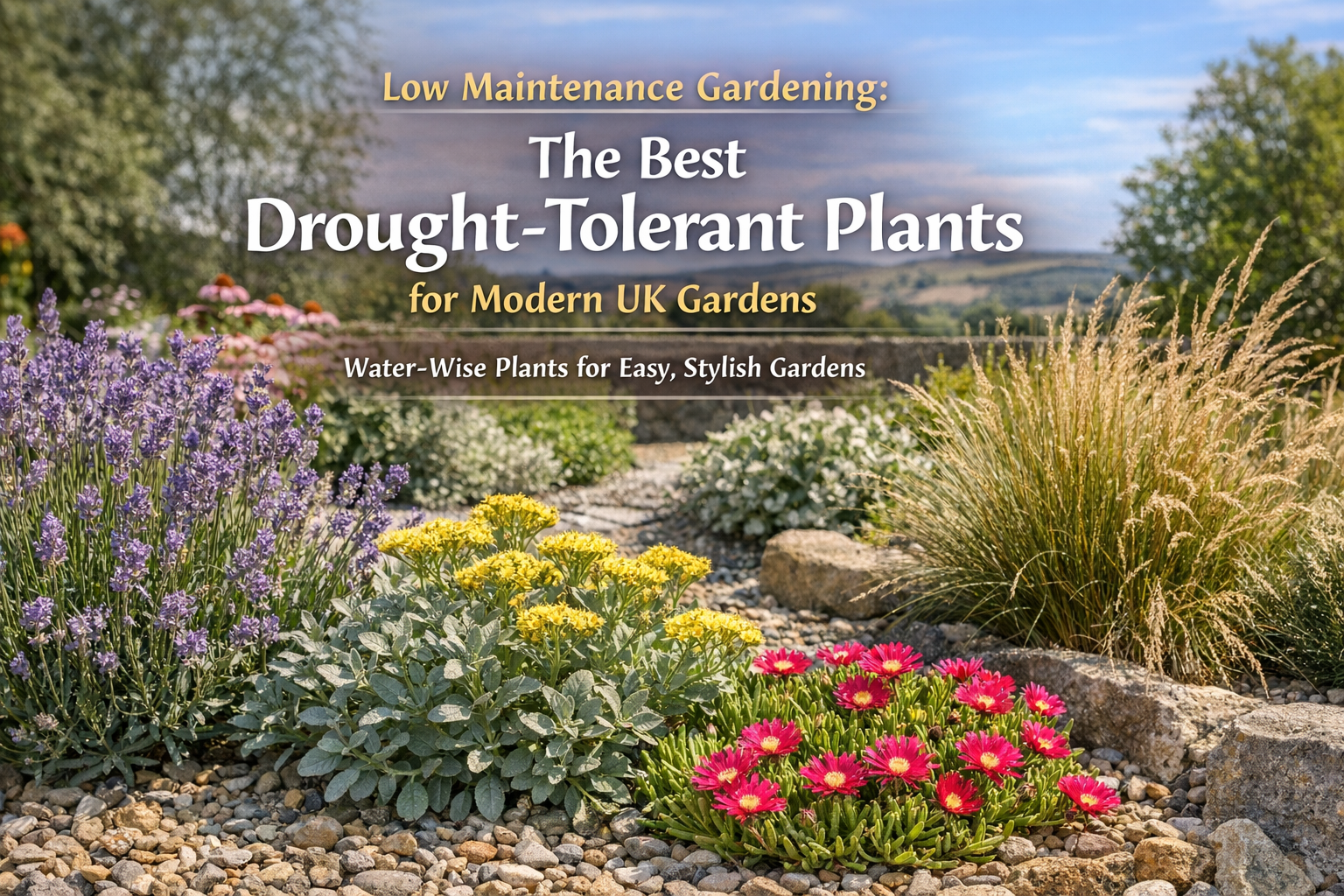
- Delosperma (groundcover)
- Lavender (structure + scent)
- Sedum (late colour)
- Ornamental grasses (movement)
This gives: ✔ year-round structure
✔ long flowering periods
✔ very low watering needs
Quick FAQ
Are drought‑tolerant plants completely no‑water?
No—plants need water to establish. Once settled, watering can be reduced significantly.
Do they work in UK gardens?
Yes—many drought‑tolerant plants also cope well with UK conditions when planted in free‑draining soil.
What type of soil is best?
Free‑draining soil is key—gritty, sandy, or improved garden soil works best.